
In our previous article, we explored how familiar journeys can inspire purposeful learning through the Kindiedays Transportation theme. Now we reach the final stop in our eight-theme series: Around the World. 🌍
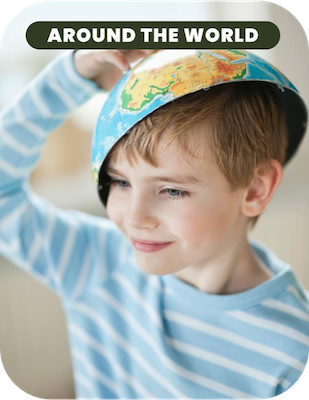
Who are the important people in our lives? What can we notice about different flags? How did people communicate before smartphones? Can a painting inspire us to create together? What happens when we turn ourselves into statues?
These questions open opportunities for language, creativity, cultural understanding, cooperation and movement. Children begin with people and experiences they know, then explore connections with a wider world.
For preschool owners and academic coordinators, this theme shows how international learning can become meaningful classroom practice through experiences children can actively take part in.
One theme with many opportunities for learning
Young children experience the world through their families, languages, neighbourhoods, stories and play. Even within one preschool, children may have different experiences of family life, celebrations, food and communication.
Around the World gives teachers opportunities to welcome these experiences into the classroom and introduce new ones.
Children can describe someone important to them, compare colours and patterns in flags, investigate a homemade telephone, explore an artist’s work and try a game introduced through Greek statues.
The starting point is curiosity:
- Who helps and cares for us?
- Which flags share the same colours?
- How have everyday objects changed over time?
- What shapes can we discover in a painting?
- How many different shapes can we make with our bodies?
Teachers guide these explorations while making room for children’s ideas, choices and questions. Families can contribute their own experiences, helping children see that people within the same country or community also live in many different ways.
Why explore Around the World in preschool?
The theme brings several learning areas together. Talking about someone special gives children a personal reason to use descriptive language. Creating a team flag connects design with cooperation. Making a cup telephone turns a discussion about the past into something children can try themselves.
The free Kindiedays Around the World Level 2 sample introduces a week called Around the World – People. It includes a weekly overview, five detailed activity plans, and supporting printable resources. Each activity is planned for approximately 30 minutes.
The examples below come from that sample. They show what children do and how teachers can support their learning.
The free sample includes the activity instructions and printable adjective cards.
👉 Download the free Around the World lesson plan sample HERE and explore all five activities with your teaching team.
Example 1: Women in our Lives
Who is an important woman in your life? What would you like to tell us about her?
Children bring photographs of important women in their lives. These might include a mother, grandmother, aunt or another person who cares for them.
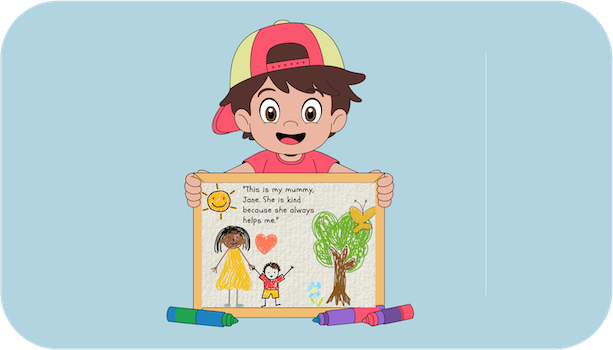
The teacher invites children to introduce their chosen person and talk about what she likes to do. Together, they explore descriptive words such as kind, funny, brave, caring and creative, using the adjective cards provided in the sample.
Each child draws their chosen person. With support, they can copy a word, attempt a short sentence or dictate an idea for the teacher to record. Children then share their work with the group.
What are children learning?
Children practise describing people, expressing personal ideas and listening to others. They begin to connect spoken language with written words through something that matters to them.
The teacher can notice whether a child names the person, chooses a descriptive word or explains that choice. A child saying “She is kind because she helps me” offers a useful opportunity to extend both language and understanding.
The free sample includes the activity instructions and printable adjective cards.
Example 2: Capture the Flag
What do you notice about these flags? What could our own team flag look like?
Children examine flags from countries represented in their group. The teacher encourages them to notice colours, shapes and patterns and find similarities between flags.
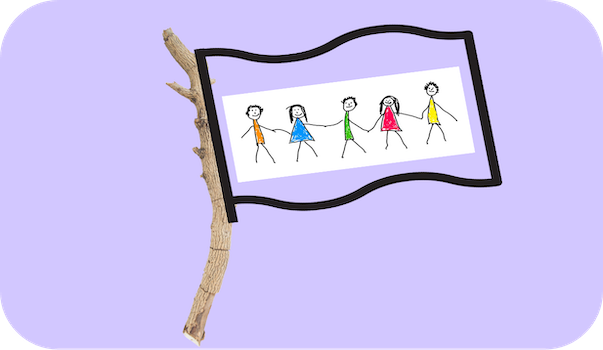
Children then work in two teams to create their own flags using the printable outlines and colouring materials. Each team chooses a design, and the teacher helps attach the finished flag to a suitable support.
The flags become part of an outdoor Capture the Flag game. Teams try to collect the other team’s flag and bring it back to their own base. Afterward, the teacher brings everyone together to discuss how they worked as a team.
What are children learning?
Children explore flags as symbols of identity while experimenting with design and materials. Making a shared flag gives them reasons to exchange ideas and make decisions together.
The game adds movement, coordination and opportunities to follow shared rules. Teachers can observe how children cooperate, respond to being tagged and reflect on what helped their team.
Example 3: Paper Telephone
How did people communicate in the past? Can we make something that carries our voices?
The teacher introduces pictures showing past and present life and invites children to describe what they notice. Which objects look familiar? Which look different from the things we use today?

Children then decorate paper cups to make their own cup telephones. The teacher makes the holes and helps thread and secure the string between the cups.
Working with a partner, children take turns speaking into one cup and listening through the other. The homemade telephone gives them something to investigate together.
What are children learning?
Children begin to explore change over time through a familiar subject: communication. Comparing pictures encourages observation, discussion and questions about how people lived before.
Making and trying the telephone also supports curiosity and turn-taking. Teachers can listen to children’s questions, notice how they explain their discoveries and help them explore what makes the telephone work.
Example 4: Circles Stamps
What colours and shapes can you see? What could we create together using circles?
Children look at Wassily Kandinsky’s Concentric Circles. The teacher invites them to identify colours and shapes and talk about what they like in the painting.
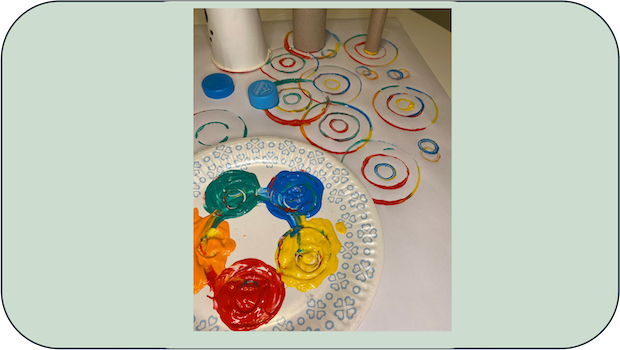
Before painting, children explore making large and small circles with their bodies, individually and together.
At the activity table, a long sheet of paper becomes a shared canvas. Children use cups, lids, sponges or other circular objects to stamp with different colours. They experiment freely while contributing to one large group artwork.
What are children learning?
Children connect geometric thinking with creative expression. They recognise circles, explore size and colour, and discover how everyday objects can make different marks.
Working on one artwork also creates opportunities to share space and materials. Teachers can observe how children experiment, describe their choices and respond to other children’s contributions.
Example 5: Creative Statues
Can you become a statue? What shape will your body make?
The teacher introduces the Greek flag and photographs of Greek statues. Children look closely: Are the figures moving or still? What positions can they see?
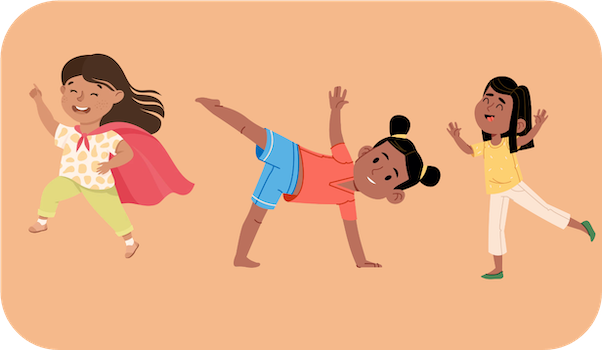
The group then plays a statues game. One child or the teacher becomes the “artist”. When the artist turns and calls “Statue!”, the other children freeze in imaginative poses. They might become a dancer, an animal, or a character of their own invention.
The artist inspects the statues and tries to make them laugh without touching. A musical variation invites children to dance when the music plays and freeze when it stops.
What are children learning?
Children explore balance, body awareness, concentration, and self-expression. They listen for a signal, control their movements and participate in a shared game.
The photographs give children a starting point for imagining poses. Teachers can observe how children manage stopping and balancing, follow the game and contribute their own ideas.
The teacher makes the learning purposeful
Across these five activities, children describe, design, investigate, paint and move. Clear objectives help teachers recognise the learning within those experiences.
A child’s explanation of “caring”, a team’s discussion about its flag or a question about the cup telephone can guide the teacher’s next interaction. The plan provides a foundation, while observation helps the teacher respond to the children taking part.
Teachers can document a child’s words, photograph the stages of the shared artwork or record an example of cooperation. Sharing a brief explanation with parents helps them understand the learning behind the activity.
For owners and academic coordinators, this creates a practical basis for supporting teachers and making everyday educational quality visible to families.
From Transportation to a full year of experiential learning
With Around the World, we have now explored all eight Kindiedays themes:
All About Me • Seasons & Weather • Animals • Community Helpers • Under the Sea • Environment • Around the World • Transportation
Each offers a different learning context. Together, they show how children’s curiosity can support language, creativity, social and emotional development, mathematical and scientific thinking, and physical development.
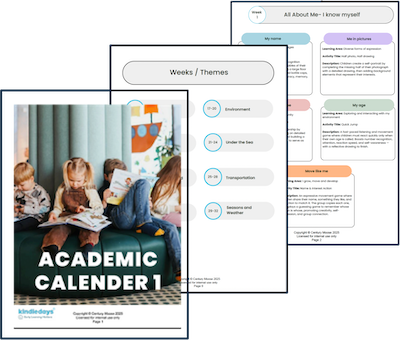
The Academic Calendar connects the themes into a structured learning journey. Teachers gain a starting point for planning experiences across different areas of development, while adapting activities to their children and local setting.
Within the Kindiedays Learning System, teacher development, lesson plans, and digital tools support the same pedagogical process. Training builds understanding. Lesson plans connect activities with learning objectives. Digital tools help teachers record observations, document progress, share learning with parents, and use evidence for formative assessment.
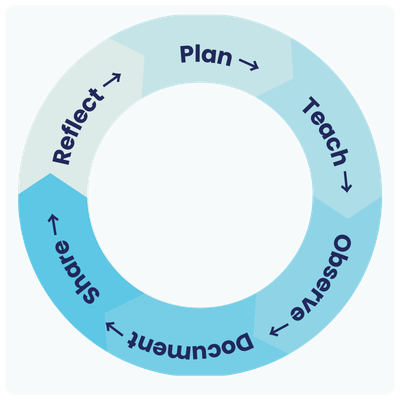
This connected approach supports teachers in planning their work and deciding how to help each child move forward.
Bring Around the World into your preschool
👉 Download the free Around the World lesson plan sample HERE to explore the weekly overview, all five activity plans, and supporting printables.
Choose an activity with your teaching team. Consider its learning objectives, prepare the materials, and listen closely to the children’s ideas. What do their words, choices, and discoveries tell you about their learning?
Our journey through the eight themes is complete, but the possibilities for exploration continue in your classroom. You can find all earlier posts here:
All About Me • Seasons & Weather • Animals • Community Helpers • Under the Sea • Environment • Around the World • Transportation
That thread connects this whole series: children learn through active experiences, while teachers guide, observe, and extend their learning with clear purpose.
Explore the Kindiedays Learning System to discover how this connected approach can support your preschool throughout the year.
Happy learning! 🌍
Team Kindiedays