.png)
Three weeks ago, we explored what true experiential lesson plans look like in practice through the Kindiedays theme Animals.
This week, we continue our journey with a completely different—but equally exciting—theme:
Community Helpers 👩🚒👩✈️👮♀️
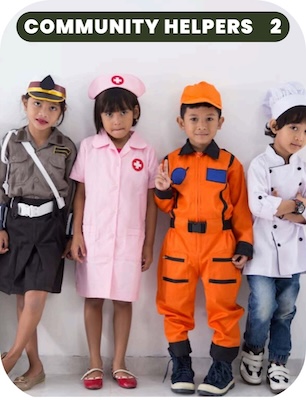
Around the theme of community helpers, children will deepen their understanding of the various remarkable individuals who contribute to our community.
Community helpers include firefighters, lawyers, doctors, mail carriers, nurses, librarians, pilots, bakers, dentists, police officers, construction workers, bus drivers, volunteers, farmers, and teachers.
These activities promote engagement, critical thinking, and knowledge retention among children. Connecting learning to real-life contexts fosters appreciation and respect for the community helpers who play vital roles in our everyday lives.
Lesson focus and goals
The learning goals go far beyond learning about professions.
- Awareness of the local community
- It promotes a sense of safety and belonging in the community
- It promotes making safe choices (learning how to ask for help & who they ask)
- Develop communication & language skills
- It encourages engagement in their own community
- They learn the importance of being helpful while understanding that they
- It sparks interest in future career choices (the ability to think of different uses for many objects)
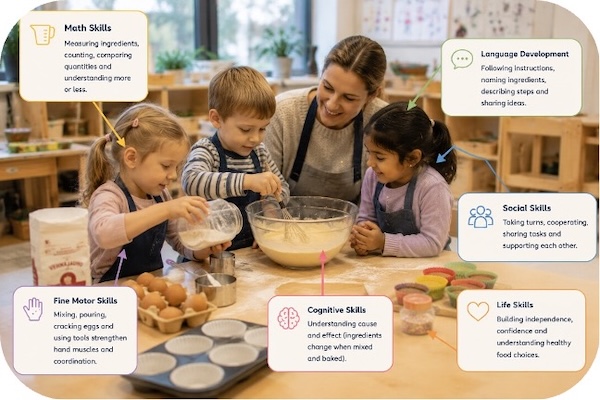
For example, children strengthen language and letter recognition, communication, cooperation, creativity, health awareness, fine motor skills, and physical development. They also develop important transversal competencies such as thinking and learning, multiliteracy, cultural competence, interaction and self-expression, and self-care.
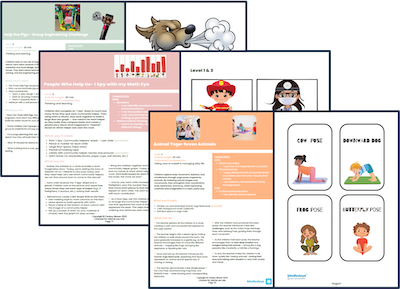
Free samples from Kindiedays Lesson Plans Level 2
Download five lesson plans about COMMUNITY HELPERS HERE. After that, print the pictures and laminate them. Read more from the lesson plan sample.
1. Exploring Our Local Heroes- Colour by Letter
Children learn about the role of Community Helpers while strengthening their letter recognition through a fun and calming colour-by-letter activity.
2. Local Community- 3D Community Map
Children explore the idea of a local community and collaboratively build a 3D model using recycled materials. If going outside isn’t possible, children explore printed pictures or classroom stories to inspire their creations.
3. Healthcare World- Working Together to Care
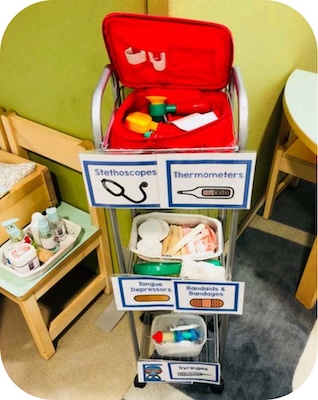
The classroom is transformed into a mini hospital, where children become doctors, nurses, pharmacists and patients. The goal is not only to learn about healthcare professions but also to experience teamwork, kindness, communication, and caring for others through play.
4. Dental Health- Happy Tooth, Sad Tooth
Children learn about healthy and unhealthy foods for their teeth by creating a collage on a happy-and-sad-tooth worksheet. They explore the dentist's role and make choices to keep their teeth healthy.
5. Trust Games- Pilot & Navigator
In this engaging obstacle course, children work in pairs as a pilot and a blindfolded airplane. Using teamwork, clear communication, and spatial awareness, they navigate through a “runway” filled with obstacles while learning about the real-life responsibilities of a pilot.
The teacher knows where the learning is. That is what makes playful learning pedagogical
This distinction is important. Playful learning isn't about filling the preschool day with random, entertaining activities.
The activity should be enjoyable and meaningful for the child—but behind it, the educator has a clear understanding of why the activity is being offered and what development it can support.
Most importantly, children learn by doing. They can build their own 3D neighbourhood from recycled materials, turn the classroom into a mini hospital and become doctors, nurses, pharmacists and patients, classify foods according to whether they are good or bad for their teeth, or work in pairs as a pilot and an “airplane” navigating an obstacle course.
Teachers introduce the topic and provide materials and guidance, but children explore, make choices, communicate, create, and solve problems on their own. For example, in the hospital role-play, children rotate between different roles and finish by reflecting together on what each professional did and how it felt to help someone.
This is what turns Community Helpers from a topic children hear about into an experiential learning theme they can explore through play.
From Community Helpers to a full year of experiential learning
Community Helpers is just one of the eight themes in the Kindiedays Lesson Plans:
All About Me – Seasons & Weather – Animals – Community Helpers – Under the Sea – Environment – Around the World – Transportation
Each theme gives children a new context to explore the world through playful, purposeful experiences.
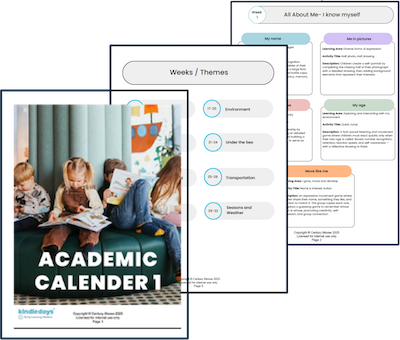
The Kindiedays Academic Calendar then brings these themes together into a clear full-year structure for three learner levels:
2-3 years | 3–4 years | 4–5 years | 5–6 years
Each week balances different areas of children's holistic development:
- Monday: Linguistic Development
- Tuesday: Art Education
- Wednesday: Social and Emotional Development
- Thursday: STEM
- Friday: Physical Development and Food
Teachers therefore don't have to choose between playful learning and systematic learning. They can have both.
Ready-to-use support for teachers
Kindiedays experiential Lesson Plans give educators practical guidance for implementing each activity, including:
- Learning area and objectives
- Transversal competencies and life skills
- A clear description of the activity
- Materials needed
- Printable resources
- Step-by-step guidance for implementation
The purpose is not to replace the teacher's creativity.
It gives teachers a strong pedagogical starting point, so they can spend less time wondering what to teach and more time observing, interacting with, and supporting the children.
👉 Read more about the lesson plans HERE!
And our journey through the themes continues...
Two weeks ago, we explored Animals, where children discovered themselves, their identities, and each other. This week, we traveled into the fascinating world of Community Helpers.
In the coming weeks, we will continue opening the Kindiedays Lesson Plan Library theme by theme and show how experiential activities can turn curriculum objectives into real, joyful learning experiences in the preschool classroom.
Playful learning is not the absence of educational goals.
It is a different—and powerful—way of reaching them.
Happy learning!
.png)