.png)
In our previous article, we explored how children can learn about the people around them through the Kindiedays theme, Community Helpers.
Now our journey through experiential lesson plans continues with something children encounter every single day:
Seasons & Weather ☀️🌧️🍂❄️
Is it sunny outside today? Is it raining? Why are we wearing a jacket? Why are the leaves changing colour? Why is it getting dark earlier? Why is it sometimes hot and sometimes cold?
For young children, weather and seasonal changes are part of their everyday world. That makes Seasons & Weather a wonderful theme for experiential learning.

Instead of simply teaching children the names of the seasons or showing them pictures of different weather conditions, we can encourage them to observe, compare, predict, discuss, create, move, build, and investigate.
Children don't have to learn about weather only from a book. They can step outside and experience it. That's where playful learning becomes purposeful learning.
One theme – many opportunities for learning
Seasons & Weather may sound like a science topic, but experiential learning lets us approach it from many directions.
Children can explore questions such as:
- What is the weather like today?
- How does the weather change?
- What happens to trees and plants during different seasons?
- What clothes do we wear when it is hot, cold or rainy?
- How do people protect themselves from different weather conditions?
- How are homes built for different climates?
- What activities can we do during different seasons?
- How can we describe what we see, hear and feel?
The important point is that the teacher does not need to provide all the answers.
Children can observe what is happening around them and build their own understanding through experience.
Why explore Seasons & Weather in preschool?
Weather is universal—but children's experiences of it can be very different.
A child in Finland may have direct experience of snow, freezing temperatures, and very long summer days. A child in India may be much more familiar with intense sunshine, monsoon rains, or seasonal temperature changes. In other parts of the world, the seasons may look different again.
That actually makes the theme even more interesting. Children can begin with their own environment and experiences, then gradually discover how weather, seasons, and people's ways of living differ around the world.
The new Kindiedays sample illustrates this breadth particularly well.
Four Seasons – Story Cards 📖
How can children understand something as abstract as seasonal change?
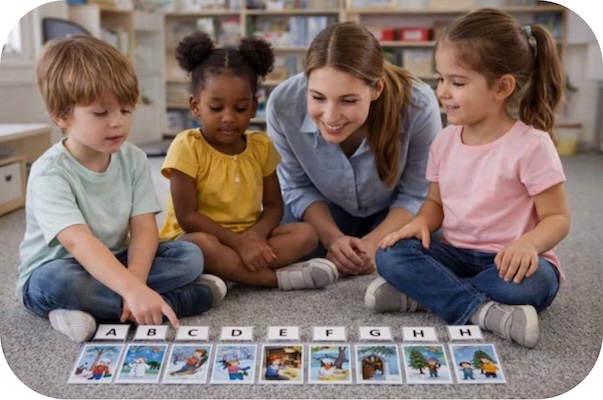
One way is through stories. In this activity, children receive picture cards representing seasonal stories. They observe the pictures, arrange them into a meaningful sequence, predict what might be happening, and tell the story in their own words.
The teacher can begin with simple questions:
What season are we in now? How do you know? What changes can you see around you?
The discussion can then move towards weather, nature, animals and clothing. Children arrange the cards, predict what happens next and compare their own ideas with the complete story.
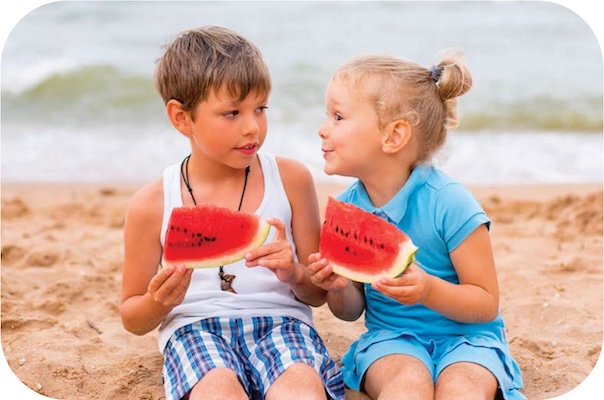
The sample includes stories from different seasons. In summer, for example, children go to the beach, build sandcastles and eat watermelon; in winter, they put on warm clothing, play in the snow, build a snowman and go sledding.
What are children actually learning?
They are doing much more than memorising the four seasons.
They practise:
- Language comprehension
- Storytelling and narration
- Sequencing and logical thinking
- Observation
- Prediction
- Vocabulary
- Connecting pictures with real-world experiences
- Listening to other children's ideas
The lesson connects specifically with multiliteracy as a transversal competence and with language comprehension, awareness, and narration. A simple seasonal story therefore becomes a rich language and thinking experience.
How do the children learn through play?
Again, the children may simply think: We're playing a game!
The teacher knows where the learning is. That is what makes playful learning pedagogical.
Children might: tell a story → construct a house → create artwork → sort weather pictures → search for a hidden object.
But every activity has a pedagogical purpose. Experiential learning does not mean letting children play randomly and hoping that learning happens. The educator understands the learning objectives, introduces an appropriate experience, provides materials and guidance, observes what happens, and encourages children to think and communicate.
At the same time, children have an active role. They explore, make choices, solve problems, communicate, create, and discover.
That balance between clear pedagogical goals and children's active participation is at the heart of Kindiedays experiential lesson plans.
Seasons & Weather can start right outside the preschool door
This theme offers another important advantage. You don't need expensive learning materials to experience weather.
Open the door and go outside.
- Is it warm or cool?
- Can you feel the wind?
- Are there clouds?
- What colour is the sky?
- Are the trees changing?
- Has it rained?
- What are people wearing?
Teachers can bring those experiences back into the classroom through discussions, drawings, photographs, weather charts, stories and playful activities.
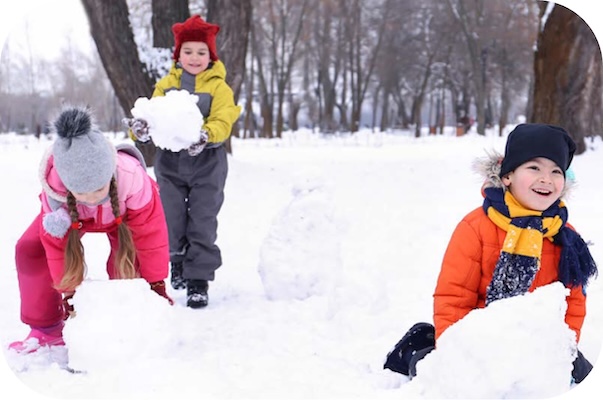
Children in Finland can build a snowman in the winter ☃️
Over time, children begin to see that nature is not static.
It changes—and they can observe those changes themselves.
From Seasons & Weather to a full year of experiential learning
Seasons & Weather is one of the eight themes in the Kindiedays Lesson Plans:
All About Me – Seasons & Weather – Animals – Community Helpers – Under the Sea – Environment – Around the World – Transportation
Each theme gives children a new context for exploring their world through purposeful, playful experiences.
The Kindiedays Academic Calendar brings the themes together into a structured full-year learning journey.
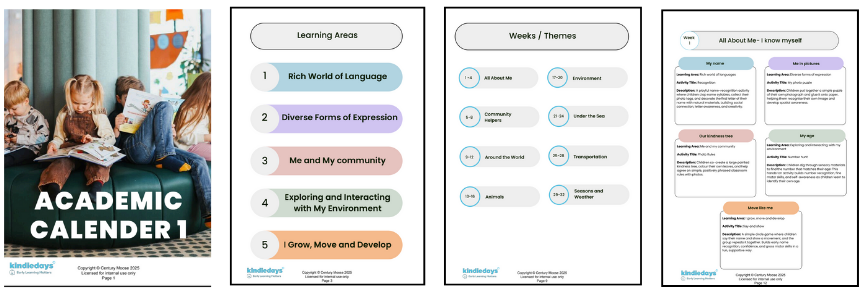
Each week also balances different areas of children's holistic development:
- Monday: Linguistic Development
- Tuesday: Art Education
- Wednesday: Social and Emotional Development
- Thursday: STEM
- Friday: Physical Development and Food
This means teachers don't have to choose between systematic learning and playful learning. They can have both.
Ready-to-use support for teachers
Creating genuinely experiential learning every day can be demanding. Searching online for "fun preschool activities" isn't enough. Teachers need to know:
Why are we doing this activity? What should children learn or develop? How should I introduce it? What materials do I need? How can I involve the children?
Kindiedays experiential Lesson Plans provide that pedagogical starting point with:
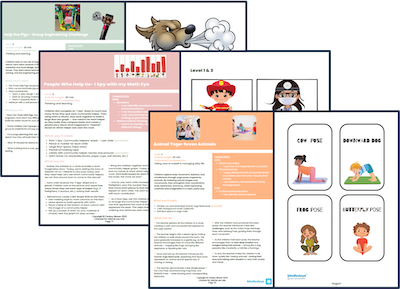
- Learning area and objectives
- Transversal competencies and life skills
- Clear activity descriptions
- Materials needed
- Printable resources
- Step-by-step implementation guidance
For example, the Four Seasons Story Cards lesson in the sample provides the educator with the activity length, transversal competencies, materials, step-by-step instructions, and specific Finnish ECEC learning objectives—not merely the idea of "telling a story about seasons. The purpose is not to take creativity away from teachers. It gives them a ready pedagogical foundation they can adapt to their children, their preschool, and their local environment.
That leaves more time for what really matters:
observing, interacting with, and supporting the children.
👉 Explore Kindiedays Lesson Plans ▶️
And our journey through the themes continues...
We've explored how experiential learning can help children discover themselves through All About Me, the animal world through Animals, their society through Community Helpers, and the changing world around them through Seasons & Weather.
And there are still four Kindiedays themes to discover:
🌊 Under the Sea
🌱 Environment
🌍 Around the World
🚗 Transportation
Each one provides a completely different learning context. But the principle remains the same.
Children learn by doing, exploring, communicating, creating, and discovering—while the teacher makes sure that behind the play there is purposeful learning.
That is what turns a fun preschool activity into a true experiential lesson.
👉 Learn more about playful learning at Kindiedays Academy
☀️🌧️🍂❄️ Happy learning!
Team Kindiedays