.png)
Forward-looking preschools seek practical ways to move toward playful, experiential, child-centered learning—the learning young children truly need.
But here is the real problem:
Most teachers have never been trained to implement these ideas in practice.
They receive textbooks or activity suggestions but lack the skills to translate them into meaningful classroom experiences.
Teachers are eager to learn
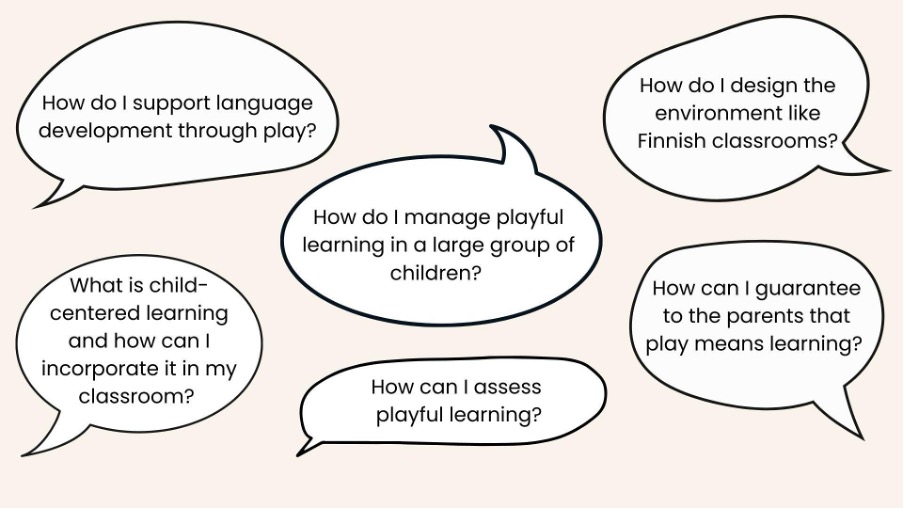
This lack of practical training means that curriculum goals often remain on paper rather than materialize in the classroom.
A Practical Solution: Kindiedays Academy
Kindiedays Academy is a 10-workshop professional development program that builds teacher skills step by step—from classroom environment and language development to STEM, art, community learning, parent partnerships, and documentation.
Every workshop includes:
- Live teaching (never pre-recorded)
- Real examples from Finnish classrooms
- Hands-on participation
- Open discussion
- Q&A and problem-solving
- Practical implementation tasks to try with children
Teachers don’t just learn theory. They practice, apply, reflect, and transform the way they teach.
Download the Full Program and SIGN UP HERE