.png)
Walk into almost any preschool today, and you will hear a similar statement from the center head or teachers:
“We follow activity-based learning.”
At first glance, this sounds exactly right. Parents like it. Teachers feel confident saying it. And compared to traditional worksheet-heavy methods, it certainly feels like progress.

But here is the uncomfortable truth preschool owners are beginning to face:
Doing activities is not the same as delivering learning.
🤔 And increasingly, parents are noticing the difference.
The Shift in Parent Expectations
Today, parents are asking deeper questions:
- What is my child actually learning?
- How is this helping their development?
- Why should I choose your preschool over another nearby option?
It means that “activity-based learning” is no longer a differentiator—it is just a basic expectation.
The Common Gap: Activity Without Purpose
Let’s look at what typically happens in many preschools:
Teachers plan daily activities like:
- Paper tearing and pasting
- Coloring worksheets
- Clay modeling
- Rhymes and circle time
Children are engaged. Classrooms are lively. Everything looks positive. But when you look closely, a few challenges appear.
Challenges
1. Activities Are Often Random
There is no clear progression from one day to the next.
Monday’s activity is not connected to Tuesday’s learning.2. No Defined Learning Outcome
Teachers may not be able to clearly explain:
- What skill is the activity developing
- Why is this activity important at this stage
3. Inconsistent Quality Across Classrooms
Two teachers in the same school may deliver very different experiences.
4. Parents See “Work,” Not “Learning.”
A craft sheet goes home, but the parent does not understand:
- What the child learned
- How it supports development
This creates a perception gap.
- From the school’s perspective, a lot of effort is going in.
- From the parents’ perspective, it looks like “just another activity.”
The Real Problem: Lack of Structure
The issue is not with activities themselves.
In fact, activities are essential in early childhood education.
The real issue is the lack of a structured approach behind them.
Without structure:
- Activities become isolated events
- Learning becomes inconsistent
- Teachers rely on personal ideas instead of a clear framework
- Schools struggle to communicate value to parents
And over time, this impacts:
- Parent satisfaction
- Retention
- Word-of-mouth referrals
- Ability to position as a premium preschool
What Modern Preschools Are Doing Differently
Forward-thinking preschools are moving beyond “activity-based learning” toward a more structured approach often called “playful learning with purpose.”
What does this actually mean in practice?
1. Every Activity Has a Clear Objective
Each activity is designed to build a specific skill:
- Fine motor development
- Language skills
- Social interaction
- Cognitive thinking
Teachers know why they are doing the activity—not just what to do.
2. Learning Follows a Progression
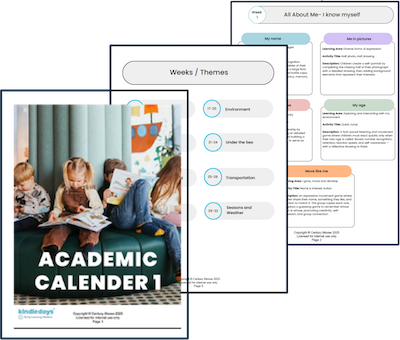
Activities are connected across days and weeks in an Academic Calendar.
For example:
- Week 1: Recognition of shapes
- Week 2: Sorting and matching shapes
- Week 3: Using shapes in creative construction
This creates a learning journey, not just isolated moments.
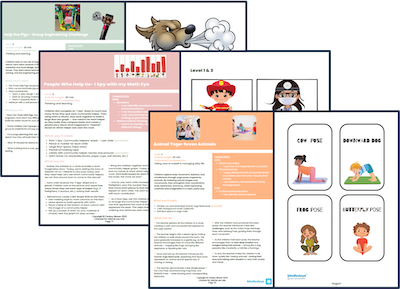
3. Teachers Are Guided with Ready Made Lesson Plans, Not Guessing
Instead of planning everything from scratch every day, teachers:
- Follow structured lesson plans
- Understand the purpose behind each activity
- Feel more confident in delivery
This reduces stress and improves consistency.
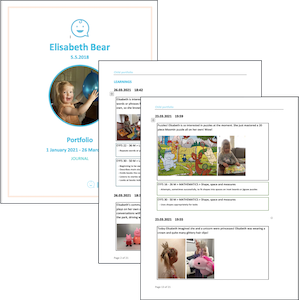
4. Learning Becomes Visible to Parents
When activities are structured:
- Teachers can explain outcomes clearly
- Communication becomes more meaningful
- Parents see progress, not just participation
This builds trust—and trust drives admissions.
A Simple Example: Same Activity, Different Impact
Let’s take a common classroom activity: paper tearing and pasting.
Unstructured Approach:
- The teacher gives paper and glue
- Children tear and paste randomly
- Outcome: A craft sheet
Structured Approach:
- Objective: Develop fine motor skills and hand strength
- Step 1: Controlled tearing along lines
- Step 2: Sorting pieces by size
- Step 3: Pasting within a defined shape
The teacher explains to parents:
“This activity is helping your child strengthen finger control, which is important for writing readiness.”
Same activity. Completely different value.
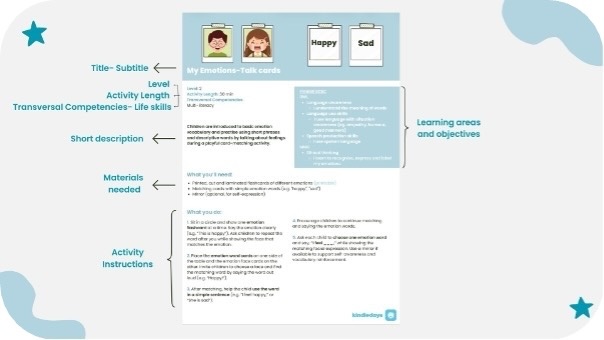
Example of Kindiedays Lesson Plan with Objectives, Materials, Instructions
Why This Matters for Your Preschool
If your preschool continues with unstructured activity-based learning, you may start facing:
✅ Difficulty in Differentiation: Every preschool nearby is also doing “activities.”
✅ Price Sensitivity: Without a clear value, parents compare only on fees.
✅ Teacher Dependency: Quality depends heavily on individual teachers.
✅ Parent Doubts: Even satisfied parents hesitate to recommend your school.
Moving Towards Structured Playful Learning
The good news is that this shift does not require a complete overhaul. It starts with a few focused changes:
1️⃣ Define Learning Goals: Be clear about what children should develop at each stage.
2️⃣ Use Structured Lesson Plans: Ensure every activity has purpose and progression.
3️⃣ Train Teachers: Help them understand and explain “why” behind activities.
4️⃣ Standardize Across Classrooms: Create consistency in experience and quality.
5️⃣ Share Meaningful Updates with Parents: Focus on learning outcomes - not just photos.
👉 Explore how Kindiedays' renewed Lesson Plan Program can help you HERE!
What next
Learn more about how Kindiedays can support your preschool, combining Finnish early education principles, digital tools, lesson plans, and teacher workshops tailored for challenger preschools.

👉 Click here to schedule a consultative call on Zoom or contact me on WhatsApp!
I look forward to meeting you.
Milla van der Burgh