.png)
And What Finnish Early Childhood Education Actually Looks Like
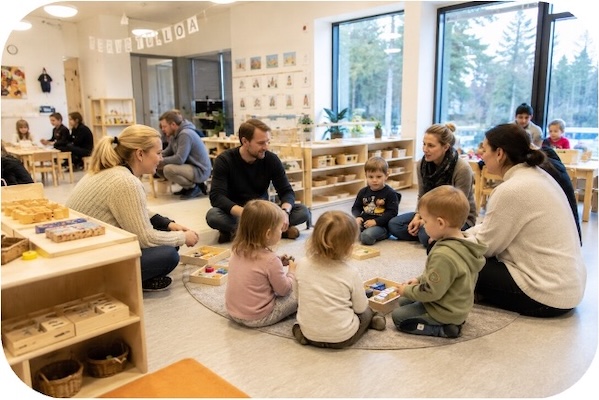
When parents first hear about Finnish education, they are often curious—but also skeptical.
Questions quickly arise:
- “Do children only play all day?”
- “Will my child fall behind academically?”
- “Is there enough discipline?”
- “How can children learn without worksheets and exams?”
These concerns are completely understandable, especially in education systems where academic performance, homework, and early literacy are strongly emphasized from a young age.
"However, many common beliefs about Finnish education are based on misunderstandings. Finnish early childhood education is not about “less learning.” It is about understanding how young children learn best and building strong foundations for long-term development.", says Stella Giota, Education Specialist at Kindiedays.
Here are some of the biggest misconceptions parents often have about Finnish education—and the reality behind them.
Misconception 1: “Children Only Play All Day”
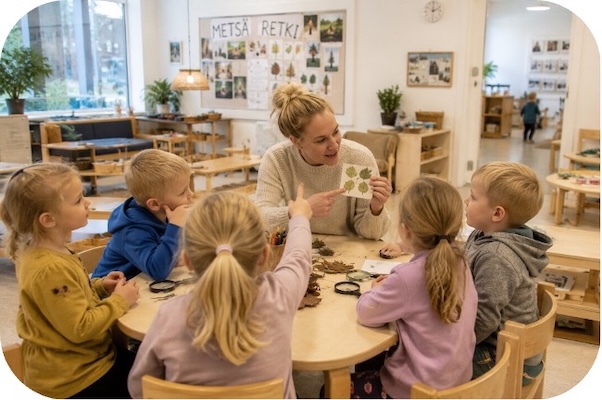
One of the most common misunderstandings is that play-based learning means children are simply left to play freely while teachers observe from a distance.
In reality, high-quality play-based learning is highly intentional.
Teachers carefully design the learning environment, prepare materials, ask questions, introduce challenges, and guide children’s thinking throughout activities. Learning goals are integrated into play experiences in meaningful ways.
For example:
- Children may develop mathematical thinking while building structures with blocks
- Literacy skills may develop through storytelling and phonics games
- Science concepts may emerge through experiments and exploration
- Social skills are strengthened through collaborative play and problem-solving
In Finnish early childhood education, play is not separate from learning—it is the way young children learn most effectively.
Misconception 2: “If Children Play More, They Will Fall Behind Academically”
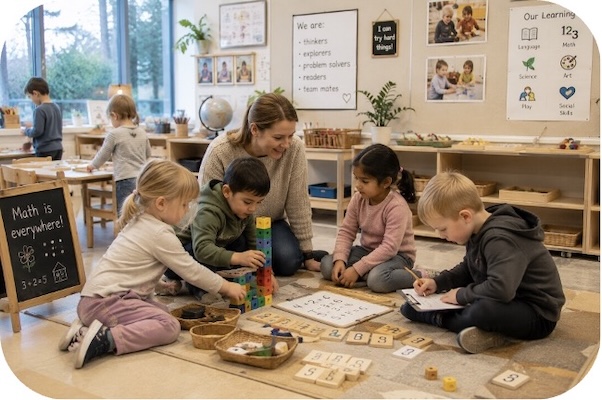
Many parents worry that delaying formal academics may negatively affect reading and writing skills later.
Research in child development shows the opposite. Before children are ready for formal reading and writing, they first need strong foundational skills such as:
- Oral language development
- Vocabulary
- Attention and concentration
- Fine motor control
- Memory
- Sound awareness
- Problem-solving abilities
These foundations are developed naturally through meaningful experiences, conversations, movement, storytelling, creative activities, and play.
Countries such as Finland intentionally focus on building these developmental foundations before introducing more formal academic instruction. As a result, children often become confident and motivated learners once formal literacy begins.
The goal is not to rush childhood, but to prepare children for lifelong learning.
Misconception 3: “No Worksheets Means No Learning”
In many traditional systems, visible workbooks and worksheets are often seen as proof of learning.
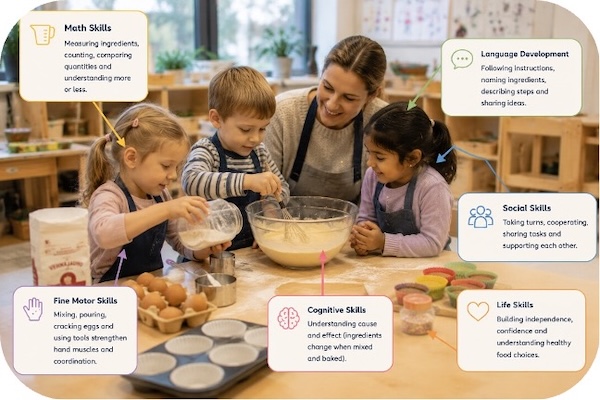
However, young children learn best through active, hands-on experiences. For example, mathematical thinking develops more meaningfully when children:
- Count real objects
- Sort materials
- Build and measure
- Recognize patterns
- Compare quantities during everyday activities
Similarly, writing readiness develops through:
- Drawing
- Clay work
- Cutting
- Building
- Fine motor activities
- Sound and phonics games
These experiences strengthen the brain and body skills children need before formal writing becomes developmentally appropriate. The focus is not simply on completing tasks but on developing deep understanding.
Misconception 4: “Finnish Education Is Too Relaxed and Has No Discipline”
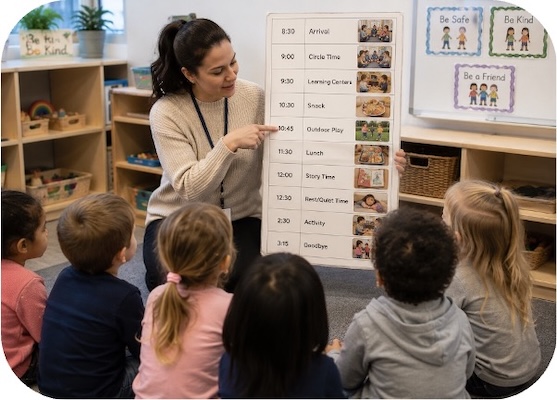
Finnish education is often misunderstood as “permissive” or lacking structure.
In reality, Finnish early childhood classrooms have:
- Clear routines
- Predictable schedules
- Classroom expectations
- Consistent boundaries
The difference is that discipline is approached through guidance and self-regulation rather than punishment or fear.
Teachers help children:
- Understand why rules exist
- Solve conflicts respectfully
- Practice cooperation
- Develop empathy
- Learn responsibility
The goal is to help children gradually develop internal discipline rather than simply obeying adults temporarily.
This approach supports not only classroom behavior, but also emotional and social development for life.
Misconception 5: “Without Exams, Teachers Cannot Measure Learning”
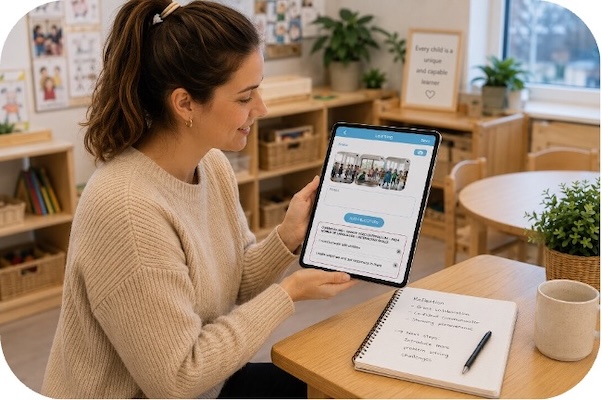
Children often cannot demonstrate their abilities through formal tests.
Instead, Finnish-inspired early childhood education uses:
- Continuous observation
- Digital Pedagogical documentation
- Learning portfolios
- Daily interactions
Teachers observe children during real learning situations and document development in areas such as:
- Language
- Early literacy
- Mathematical thinking
- Creativity
- Social interaction
- Physical development
Through tools such as the Kindiedays Apps, teachers can document learning moments and connect them to curriculum objectives, helping parents understand how learning is happening over time.
Assessment becomes continuous, meaningful, and connected to real development, not just to performance on a single test.
Misconception 6: “Children Need Homework to Learn”
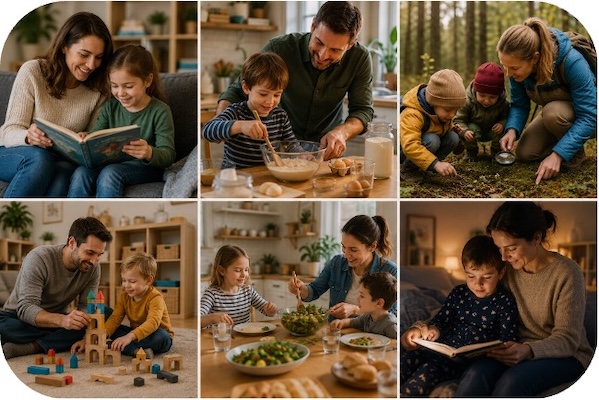
In early childhood, learning happens everywhere and not only at school.
Research shows that young children learn best through:
- Conversations
- Reading together
- Play
- Cooking
- Daily routines
- Outdoor exploration
- Meaningful interaction with adults
Instead of formal homework, Finnish-inspired education encourages learning through everyday life experiences.
For example:
- Cooking supports mathematics
- Storytelling strengthens language
- Nature walks encourage curiosity and observation
- Games develop problem-solving and social skills
The goal is to create a positive relationship with learning rather than additional pressure at an early age.
Misconception 7: “Technology Replaces Teachers in Finnish Education”
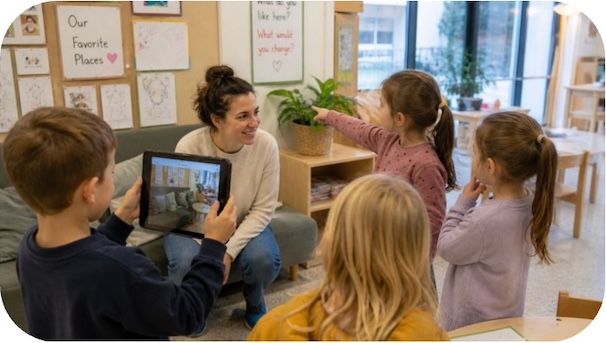
Technology in Finnish early childhood education is used carefully and purposefully.
Young children still learn primarily through:
- Human interaction
- Hands-on experiences
- Movement
- Exploration
- Play
Digital tools are used to support learning and communication—not to replace teachers. For example, teachers may use technology to:
- Document learning
- Share updates with families
- Explore topics together
- Support communication
However, the teacher remains the central guide in the learning process.
Finnish Education Is Not About “Less Learning” — It Is About Different Learning
At first glance, Finnish early childhood education may appear less academic because children are not constantly completing worksheets, memorizing information, or sitting for long periods.
But underneath the surface, children are continuously developing:
- Language
- Thinking skills
- Creativity
- Emotional regulation
- Independence
- Collaboration
- Problem-solving
- Curiosity
- Confidence
These are the very foundations that support later academic success and lifelong learning.
The Finnish approach recognizes that childhood is not a race. Early childhood education is not only about preparing children for the next grade—it is about helping children become capable, motivated, and emotionally healthy learners for life.
At Kindiedays, we understand that introducing a new educational approach can raise many questions for families. That is why we believe that parent partnership is an essential part of early childhood education.
Arranging Parent Orientation Sessions is Crucial
To support this collaboration, Kindiedays offers parent orientation sessions twice a year for the families of our partner schools. These sessions help parents better understand Finnish-inspired education, playful learning, child development, and practical ways to support learning naturally at home.
Because when schools and families work together, children thrive. Contact me to learn more.
❤️ Warm Wishes!
Stella Giota
Kindiedays Education Specialist