.png)
Playful learning didn’t start as a trend. It didn’t originate in Finland either.
And it’s definitely not about “just letting children play.”
So where did playful, experiential learning come from — and how did it become the foundation of Finnish early childhood education?
Kindiedays Education Specialist Stella Giota tells the story.
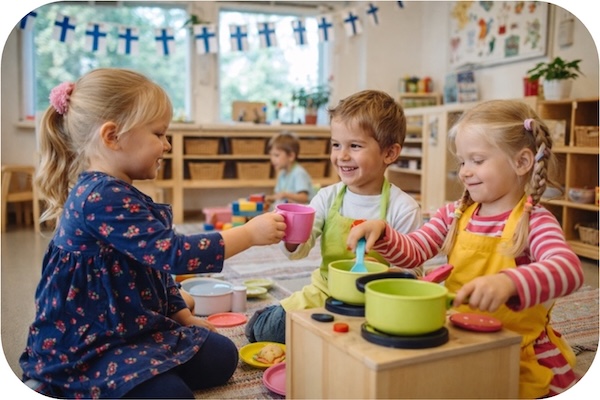
Learning through experience: an old human idea
Long before schools, curricula, and worksheets, humans learned by doing.
Children learned by:
- Watching others
- Trying things out
- Making mistakes
- Playing, imitating, and experimenting
Learning through experience is not new. What is new is how education systems choose to value or ignore it.
In many ways, what we now call playful, experiential learning is simply a return to how children have always learned best.
When experience became “learning”
In the early 20th century, educators began to give this idea words and structure.
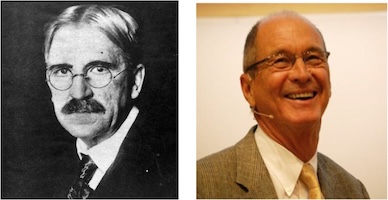
- John Dewey argued that learning happens through experience and reflection, not memorisation. Education, he believed, should connect to real life.
- Later, David Kolb formalised this into Experiential Learning Theory, showing that learning happens through a cycle: experience → reflection → understanding → trying again.
At this stage, experiential learning was mostly discussed in adult education and universities. Something essential for early childhood was still missing.
When play entered the picture
That missing piece was play.
Early childhood educators and psychologists showed that for young children, play is the most natural form of experience.
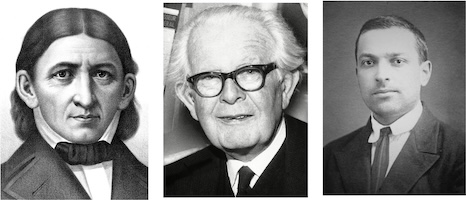
- Friedrich Fröbel, founder of the kindergarten, described play as the highest form of learning.
- Jean Piaget showed that children actively construct knowledge through exploration.
- Lev Vygotsky explained that learning grows through social interaction and adult support.
Together, they helped us understand something powerful:
Play is not the opposite of learning.
It is one of the richest forms of learning.
Through play, children develop language, thinking skills, emotional regulation, creativity, and social understanding.
“Can this work in other countries?”
This is one of the most common questions we hear:
“This sounds wonderful — but can playful, experiential learning work outside Finland?”
The answer is yes.
Playful, experiential learning did not start in Finland. Its roots are international — in philosophy, psychology, and pedagogy across many countries.
Finland didn’t invent the idea. Finland revitalized it.
That means this approach is not a “Finnish method” that can’t travel. It is a human way of learning that can be adapted to different cultures and curricula.
Why Finland embraced it fully
Finland made deliberate choices that allowed playful learning to thrive.
Trust in teachers
Early childhood teachers are highly educated professionals who understand the pedagogy behind play.
A protected childhood
Formal schooling starts at age 7, leaving the early years for play, exploration, and relationships.
Wellbeing before performance
Emotional safety and belonging are seen as prerequisites for learning.
Play written into policy
The Finnish National Agency for Education clearly states that children learn through play, interaction, movement, and exploration.
Play in Finland is not optional. It is intentional and pedagogical.
What this means for classrooms everywhere
Playful, experiential learning is not about copying Finland.
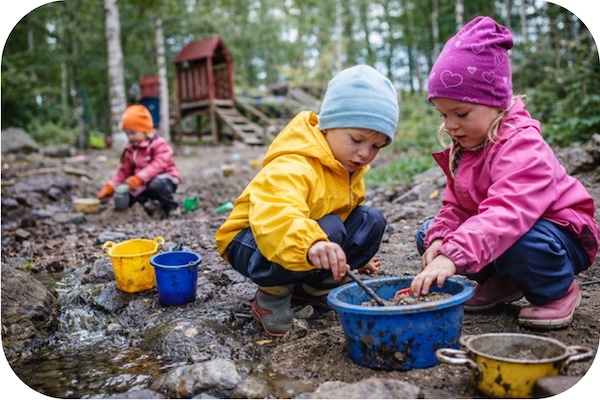
It is about:
- Trusting children as capable learners
- Supporting teachers as reflective professionals
- Designing learning that is meaningful, not mechanical
This philosophy is at the heart of how Kindiedays lesson plans and teacher training support educators worldwide — helping them turn curriculum goals into playful, meaningful experiences.
A final thought
Playful, experiential learning didn’t start in Finland. And it doesn’t belong only to Finland.
What Finland shows us is that when systems trust teachers and protect childhood, playful learning can truly flourish.
The real question is not:
“Can we do this in our country?”
But:
“What needs to change so that meaningful learning through play is truly possible?”
That’s where the real work — and the real hope — begins. As a start, why don't you download our guide about Finnish Education HERE!
Warm regards ❤️

Stella Giota, Kindiedays Education Specialist
PS On Thursday, January 29th, I am running a workshop "The Strengths of Finnish Education". You can still sign up HERE.