.png)
Originally published January 21, 2025 — republished with updates for 2026
When we refer to the best preschool practices from Finland, many customers ask us about the background and research evidence for Finnish ECEC and Kindiedays Curriculum Partnership, and how it compares to NEP2020.
Kindiedays Co-founder Jessi van der Burgh provided a concise summary of Finland’s National Curriculum, including its historical and philosophical underpinnings, the key elements that make it effective, and how it compares with well-known pedagogical approaches such as Montessori, Waldorf, Reggio Emilia, and the theories of Piaget and Vygotsky.
👉 As an additional benefit, we now included a comparison between Finland's Curriculum and India's NEP 2020 vision based on practical work with preschools in both countries by Kindiedays CEO Milla van der Burgh.
1. Philosophical and Theoretical Influences
While Finland does not strictly follow any single branded methodology (like Montessori or Waldorf), it incorporates insights and best practices from various educational philosophers and theorists:
- Jean Piaget (1896–1980): Emphasized the importance of child-centered learning and the idea that children construct knowledge through hands-on experiences.
- Lev Vygotsky (1896–1934): Stressed the social context of learning, with a particular focus on language, interaction, and the “zone of proximal development,” where adults or peers scaffold children’s education to help them reach higher levels of understanding.
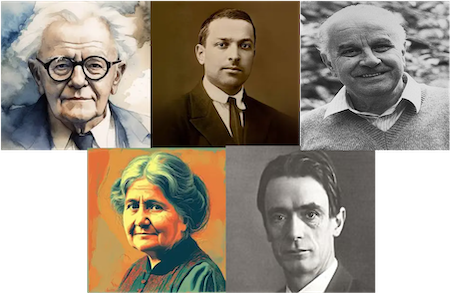
Finland’s ECEC also appreciates the value of creativity and independence found in methods like Montessori, the emphasis on holistic development in Waldorf, and the project-based, community-centered principles of Reggio Emilia. However, Finnish ECEC integrates these perspectives into a distinctive approach, guided by national curricula and robust teacher training.
2. Finland’s Early Childhood Education
Key concepts:
1️⃣ Holistic Child Development
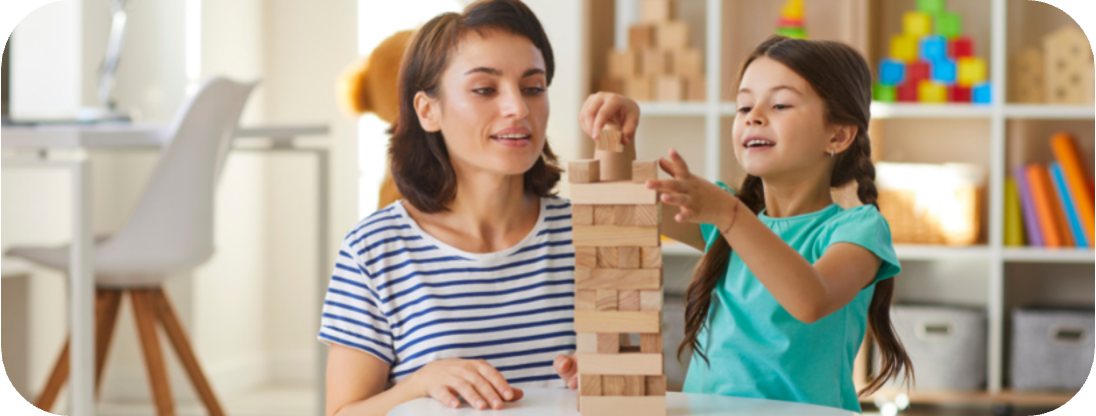
Finland’s ECEC strongly emphasizes the child's overall well-being and balanced development—physically, emotionally, socially, and cognitively. This means learning does not focus solely on academic skills (such as letters and numbers) but also on fostering curiosity, social skills, independence, and creativity.
2️⃣ Play-Based and Child-Centered
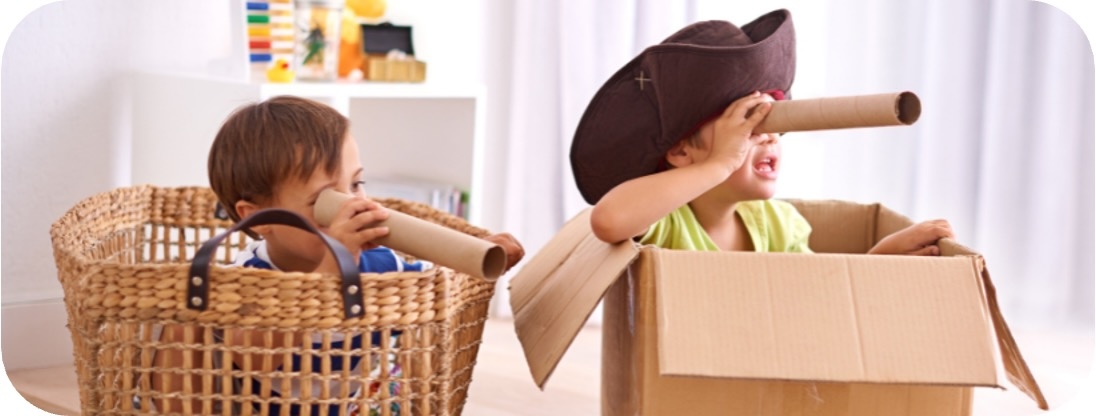
Inspired by Piaget, Vygotsky, and other child development theories, Finland strongly believes in play as the primary vehicle for learning in the early years. Teachers observe children’s interests, facilitate explorations, and create environments that allow children to learn through hands-on activities and social interactions.
3️⃣ Qualified and Respected Educators
ECEC teachers in Finland are highly trained—often holding at least a bachelor’s degree in Early Childhood Education or a related field. This professional respect and trust in teachers underscores the belief that quality education depends on well-prepared educators who adapt to each child’s needs.
4️⃣ National Core Curriculum
Finland’s ECEC is governed by a national core curriculum that outlines objectives and guidelines, ensuring consistency nationwide. This curriculum encourages local adaptation, allowing teachers to tailor activities to the unique needs and context of their children.
5️⃣ Well-Being and Equity
Access to affordable, high-quality daycare and preschool is a cornerstone of the Finnish system. Regardless of background, all children have the same opportunity to receive top-notch early education. This commitment to equity aligns with research showing that investing in early years benefits individuals and society.
6️⃣ Family Engagement and Community
Finnish ECEC programs emphasize collaborating with families. Teachers work with parents or guardians to set learning objectives and ensure a supportive environment beyond the school setting.
7️⃣ Sustainability and Nature
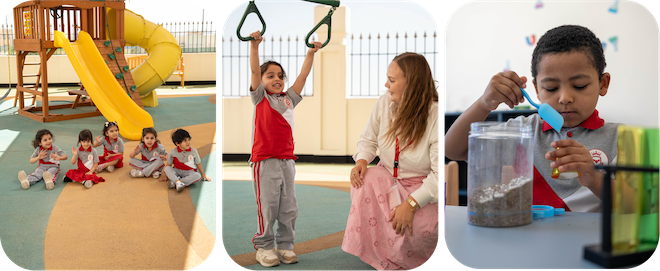
Playing outdoors is part of the daily routine—even in winter. Emphasizing a connection to nature and promoting sustainable, environmentally responsible habits from an early age are integral parts of the curriculum.
3. Why It Works So Well in a Nutshell
Cornerstones:
📈 Research-Driven Methods
Finland’s approach is data-informed and continuously evolving. Finnish universities conduct extensive research on child development and pedagogical methods, enabling the ECEC system to adapt based on evidence.
🥰 Emphasis on Social and Emotional Learning
Tied to Vygotsky’s ideas, Finnish preschools focus on collaboration, communication, and emotional well-being. A positive atmosphere will lay the groundwork for more advanced academic skills later.
👩🎓 Trust in Teachers
The Finnish ethos of trusting professionals to make pedagogical decisions fosters innovation and responsiveness. Teachers have the autonomy to adapt lessons that support each child's individual needs and interests.
⚖️ Balanced Structure
While structured activities are provided, ample time is allocated to free play, social interaction, and outdoor experiences. This balance helps develop independence, problem-solving skills, and healthy social relationships.
4. Research and Implementation
Evidence:
⏳ Longitudinal Studies on Play and Learning: Finnish researchers have conducted studies demonstrating the benefits of play for cognitive, social, and emotional development. This research directly influences curriculum updates and teaching strategies.
🇫🇮 National Evaluations: Regular assessments by the Finnish Education Evaluation Centre (FINEEC) ensure that ECEC programs meet quality standards and remain aligned with the latest findings in child development.
👩🎓 University Collaboration: Universities such as the University of Helsinki and the University of Tampere collaborate closely with childcare centers and municipal authorities to pilot new approaches, collect data, and implement policy changes.
Comparisons with Other Approaches
- Montessori (Italy): Focuses on independence and self-directed activity with carefully prepared materials. While Finnish preschools might not use classic Montessori materials, child-led exploration aligns well with Finnish pedagogy.
- Waldorf (Germany): Emphasizes creativity and imagination through art, storytelling, and nature. Finnish ECEC also weaves creative play and nature immersion into daily routines.
- Reggio Emilia (Italy): Emphasizes project-based learning and community involvement. Finland similarly values children’s interests and community engagement, though Reggio places a powerful focus on documenting the learning process.
Conclusion
Finland’s success in Early Childhood Education and Care is rooted in research-based methods, a deep respect for children as active learners, and a system that values and trusts professional educators. Drawing on the theories of Piaget and Vygotsky, and on principles from Montessori, Waldorf, and Reggio Emilia, the Finnish approach remains uniquely adapted to its cultural context of equity, well-being, and a love of nature. With ongoing research and curricular refinement, Finland continues to stand out as a global leader in ECEC.
Download our compact GUIDE TO FINNISH ECEC HERE!

📌 India 🇮🇳 & Finland 🇫🇮 : Shared Vision, Different Journeys
Below, we compare India’s current policy and curriculum frameworks withFinland’s national curriculum, highlighting how they align and differ—especially for private preschools striving to deliver high-quality experiences that align with parents’ aspirations in mid-income markets.
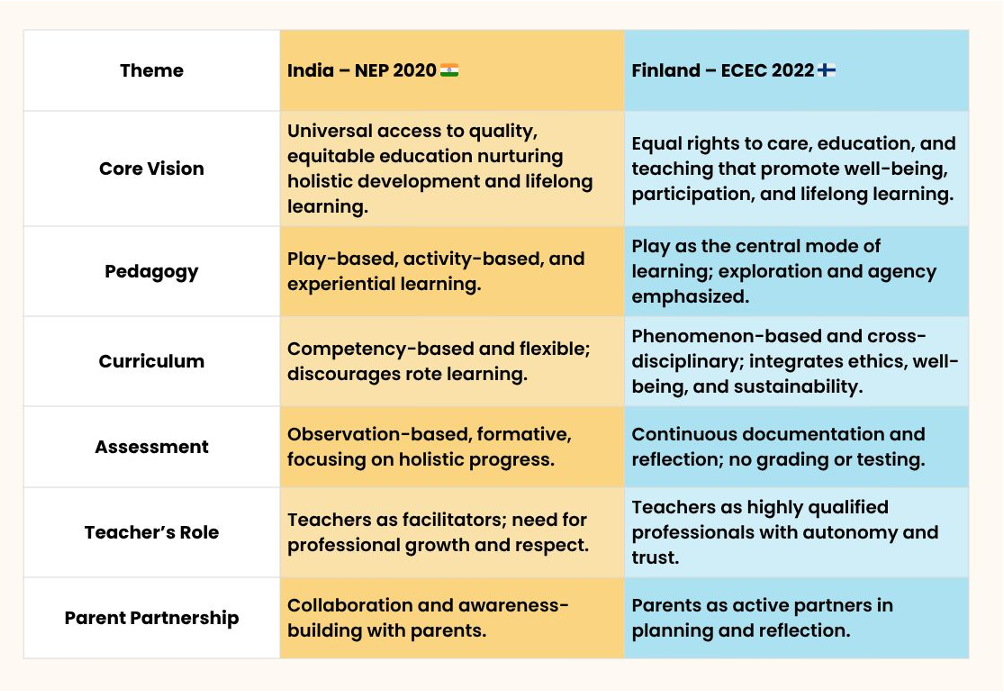
Both NEP 2020 and Finland's ECEC 2022 place playful, holistic learning and teacher empowerment at the heart of quality education.
📌 Final Thought: Connecting Policy to Practice
Both Finland and India believe that early childhood curriculum matters profoundly for children’s future learning, well-being, and lifelong trajectories. The Finnish model offers a fully implemented, well-resourced national curriculum system that today’s preschool leaders can draw inspiration from. At the same time, India’s NEP 2020 and NCF frameworks provide a vision and structural shift that private preschools can adopt today to create meaningful, joyful, and developmentally rich experiences for children.
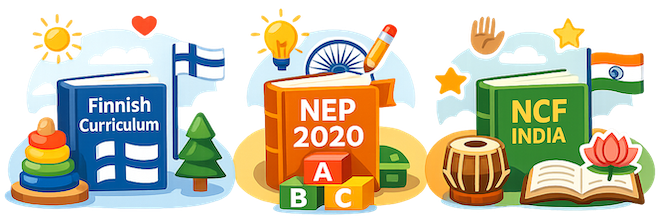
By developing curricula and teaching practices aligned with research-based goals, holistic outcomes, and culturally responsive play, preschools in India can authentically blend local context with global best practices, setting new benchmarks in early childhood education.
What next?
👉 Learn more about how Kindiedays can support your preschool with a complete Curriculum Partnership — combining Finnish early education principles, digital tools, lesson plans, and teacher workshops tailored for challenger preschools.

I look forward to meeting you.
Milla van der Burgh
👉 Click here to schedule a consultative call on Zoom or contact me on WhatsApp!
Said by our customers
"We blend play-based learning with foundational academics, fostering curiosity, creativity, and critical thinking. This ensures a nurturing environment where students develop essential social, emotional, and cognitive skills while laying a foundation for lifelong learning.” Jitendra Dewoolkar, Founder Trustee, Cresmonde World School, India