.png)
Starting a preschool is one of the most meaningful ventures an education entrepreneur can take on. Young parents increasingly seek safe, nurturing, and pedagogically balanced early learning spaces. The demand for high-quality preschools continues to surge. However, the landscape has also become competitive, and families now expect much more than basic childcare. They look for schools that combine international best practices, joyful learning, and holistic preparation for the future.
Together with Senior Preschool Consultant Ranjan Goyal, we recently published a blog series in 7 steps from Planning to Launch for a modern preschool. Here is a compilation including links to the original full blog posts. We also included some extra highlights.
1. Laying the Foundation: Starting a Preschool
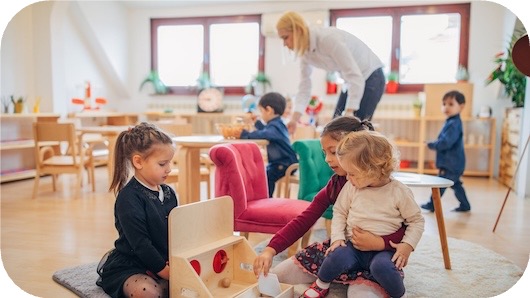
Launching a preschool goes far beyond renting a building and hiring a few teachers. It requires clarity of vision, careful planning, and a deep understanding of how children learn. Today’s forward-looking preschools are built around play-based pedagogy, meaningful child engagement, quality documentation, and transparent communication with parents. These align directly with new education policies such as the National Education Policy (NEP 2020) in India, which strongly encourages experiential, child-centered learning.
Define the Vision and Identity of Your Preschool
Your vision sets the tone for everything that follows. Will your school focus on experiential learning? Will you follow an academic readiness model? Or do you aim to offer holistic development blending academics, creativity, physical development, and social-emotional learning? A well-expressed philosophy not only guides your teachers but helps parents understand what makes your preschool unique.
Choosing the Right Location and Infrastructure
A successful preschool needs a safe, accessible, welcoming environment. Key elements include:
- A ground-floor location whenever possible
- Bright, airy classrooms
- Secure, child-safe materials and furnishings
- Age-appropriate indoor and outdoor play areas
- Clean washrooms designed for children
The physical environment reflects your pedagogy. A preschool that aims for child-led learning must create spaces that invite exploration, problem-solving, and creativity.

Hiring and Growing the Right Team
Your teachers are the heart of your preschool. Recruit individuals who:
- Love working with young children
- Are willing to learn new teaching methods
- Understand the value of observation and child-centered learning
- Communicate well with parents
Even teachers with years of experience may require re-training if they are used to a traditional “chalk and talk” approach. A strong professional development plan is essential for long-term quality.
Building Confidence with Parents from Day One
Parents today expect schools to be transparent, organized, and communicative. Even before your preschool opens, start building trust through:
- Introductory meetings
- Clear presentations of your curriculum
- Mock classes or open houses
- A simple digital platform for parent communication
Parents want to know how their child will learn, what activities they will be offered, and what values guide your team.

Using Technology to Stay Ahead
Modern preschools use digital tools to:
- Document children’s learning
- Share updates with families
- Help teachers streamline planning
- Maintain quality and consistency
- Organize daily routines
By integrating thoughtful and straightforward technology early, you can differentiate yourself and build long-term credibility.
2. How to Build a Strong Business Plan for a Premium Preschool
A professionally designed business plan is essential for managing finances, making decisions, and attracting parents. It also helps support steady growth as your preschool becomes established.
| Understanding Your Investment | Exploring Revenue Streams |
|
|
Balancing investments and revenue streams is key. Your revenue does not have to depend only on tuition fees. Successful preschools diversify. This allows you to stabilize finances even outside the main academic term. Setting up a preschool involves both one-time and recurring expenses. Plan your budget across 3 phases: setup, pre-launch, and operational months.

Branding, Positioning, and Pricing for Your Preschool
Your brand should reflect a modern, aspirational learning environment. Good branding helps your preschool stand out, increases admissions, and builds a long-term reputation.
| The Brand Must Communicate | Pricing Should Reflect |
|
|
Pricing should reflect your curriculum, teacher quality, infrastructure, and location. Offering different fee schedules (monthly, termly, yearly) gives parents flexibility.
Risk Management and Survival Strategy
Common risks include:
- Teacher turnover
- Seasonal admissions
- Competition
- Unexpected rent increases
- Parent complaints or dissatisfaction
Prepare for challenges and have a clear plan to manage them. Schools that anticipate problems grow faster and stronger.
When your preschool performs well, parents often request additional branches. Standardizing your processes—curriculum, training, communication, assessments—reduces the learning curve for new branches. The goal is for every center to deliver the same high-quality experience.
A strong business plan turns passion into a sustainable, admired preschool brand.
3. Visionary Leadership in Preschools: Leading Educational Transformation
Every meaningful improvement in a preschool begins with a committed leader. Owners and principals shape the culture, expectations, and quality of learning far more than any single tool or curriculum.
Preschools vary widely in their teaching styles. Many still follow outdated practices—rote activities, worksheets, and rigid routines. Transforming these methods requires leadership that is curious, open-minded, and courageous.

What Makes a Preschool Owner a Visionary Leader?
A visionary owner:
- Sets a clear direction grounded in child development
- Actively observes teaching practices
- Supports continuous learning for teachers
- Encourages innovation and reflection
- Builds trust with parents through transparency
Visionary preschools are not afraid of change—they embrace it and guide their community with confidence.
Leading Your Team Through Change
Change can be uncomfortable. Some teachers may resist new methods. Some parents may misunderstand playful learning. Visionary leaders make change easier by:
- Explaining the “why” behind new practices
- Showing concrete examples from well-performing preschools
- Providing hands-on training and mentorship to teachers
- Introducing changes gradually
One small change—like adding reflection time or starting learning documentation—often creates a ripple effect that improves overall quality.
Why Modernisation Is a Business Strategy
High-quality schools stand out. Parents talk. Word spreads. A modern, caring, well-documented learning environment instantly improves reputation and admissions.
Leadership in preschools is not only about inspiring teachers—it is also about guiding the business toward long-term stability and growth.
4. Preschool Transformation as a Structured Change Management Process
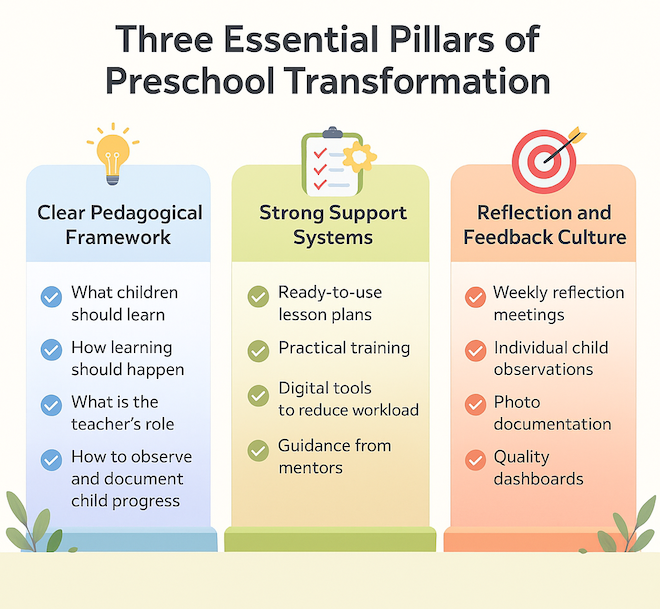
Changing teaching methods is not simply a matter of giving teachers new lesson plans. It requires a supportive, step-by-step process that builds new habits and strengthens professional confidence.
Why a Structured Process Matters
Without structure, change becomes confusing and stressful. With a straightforward process, teachers feel excited to grow, parents see consistent improvement, and children benefit from a richer learning environment.
5. Selecting the Right Curriculum Partner for Your Preschool
A curriculum partner is not only a supplier of lesson plans. A good partner supports your teachers, operations, parent communication, and long-term reputation.
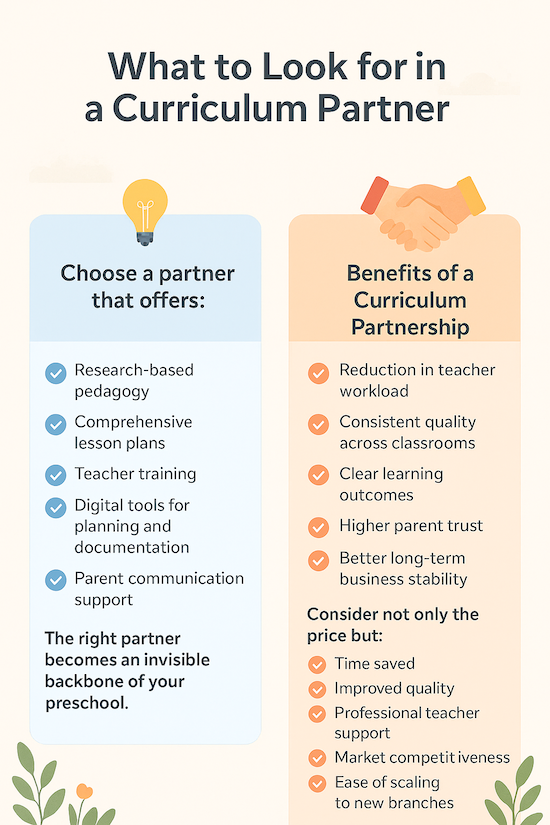
A well-chosen curriculum partner pays for itself many times over.
6. Blended Curriculum: Where Experiential Learning Meets Academics
Indian parents want the best of both worlds:
- Play-based, engaging learning
- Strong academic foundation
A blended curriculum addresses both needs.

What Is a Blended Curriculum?
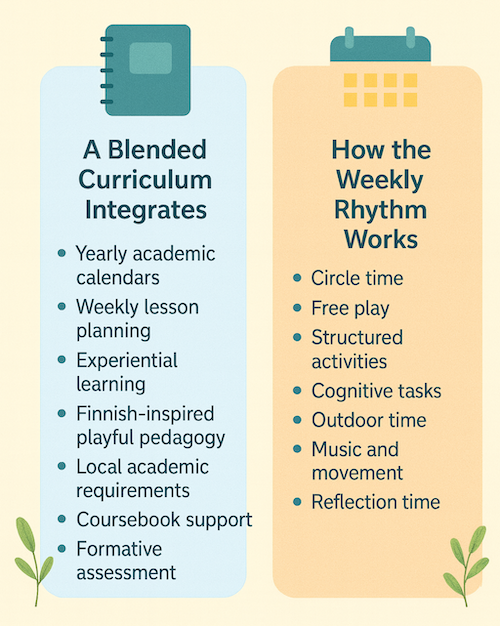
This ensures children learn joyfully while preparing for primary school success.
7. Teachers: The Heart, Soul, and Strength of Every Preschool
A preschool’s success depends more on its teachers than on buildings, materials, or branding.

Professional teachers:
- Understand child development
- Use a warm, responsive approach
- Create engaging learning environments
- Manage classrooms calmly
- Observe and document carefully
- Communicate with parents effectively
Teacher Development
| Build Skills, Confidence, and Pride | Motivating and Retaining Teachers |
|
Teachers benefit from:
|
Key strategies include:
|
A motivated teacher builds a happy, thriving classroom.
8. Parents as Partners: Building Strong and Meaningful Relationships
Parents today want to be involved. They appreciate schools that make learning visible, invite collaboration, and value their insights.
Strong parent-school partnership results in:
- Better learning outcomes
- Higher satisfaction
- Stronger community
- Positive word-of-mouth referrals

Effective Parent Engagement Strategies
- Daily updates through digital tools
- Regular parent-teacher meetings
- Workshops on child development
- Open houses and family events
- Transparent communication
- Listening actively to feedback
When parents trust your school, they become your biggest ambassadors.
9. Quality-Assured Learning: Your Competitive Edge
Parents today expect evidence. They want to see real learning, not just promises. Quality assurance helps you deliver consistent, transparent, measurable learning outcomes.
| Quality Is Defined Through | A Quality System Helps You |
|
|
Digital platforms create clarity by
- Capturing learning moments
- Tagging observations to developmental goals
- Sending regular updates to parents
- Maintaining digital portfolios
- Providing analytics for school improvement

Parents value schools that share objective evidence of their child’s growth. This builds trust, boosts admissions, and strengthens your brand.
10. Pedagogical Documentation: Making Learning Visible
Pedagogical documentation transforms the classroom from routine activities to reflective learning.
Documentation helps teachers:
- Observe children deeply
- Understand interests and strengths
- Plan better lessons
- Showcase learning to parents
- Celebrate achievements
Teachers can document through:
- Photos
- Short notes
- Child work samples
- Learning stories
- Videos (when appropriate)
These small practices create huge learning insights.

Digital Tools Make Documentation Easy
Digital platforms simplify documentation by:
- Allowing instant capture
- Tagging developmental goals
- Organizing portfolios automatically
- Sharing with families
- Providing analytics for improvement
Documentation brings clarity, transparency, and depth to early learning.

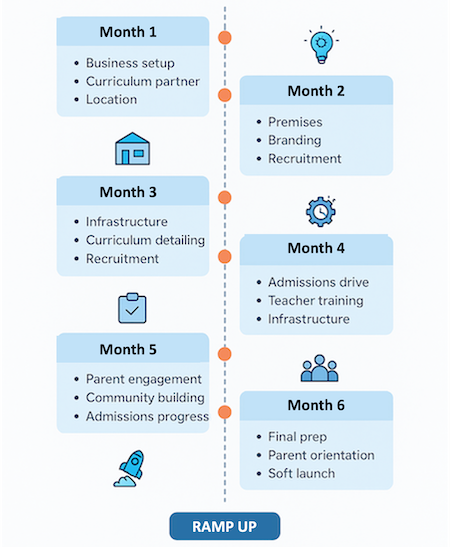
11. Your Step-by-Step Action Plan to Launch Your Preschool
Opening admissions in April or June is ideal, mainly. To achieve this, you need a structured plan that begins about six months earlier.
Below is a practical month-by-month guide that many successful preschools follow.
 .
.
A clear roadmap ensures you stay on track and launch smoothly with minimal stress.
12. Why Partner With Kindiedays
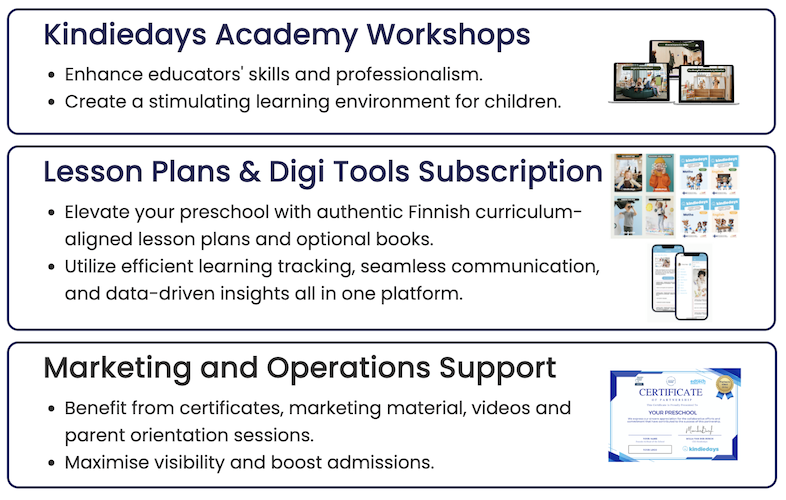
Kindiedays uniquely combines curriculum, technology, teacher development, and quality systems—all in one ecosystem built on Finnish best practices and adapted for local cultures and curriculums.
What Kindiedays Provides
How does the preschool benefit?
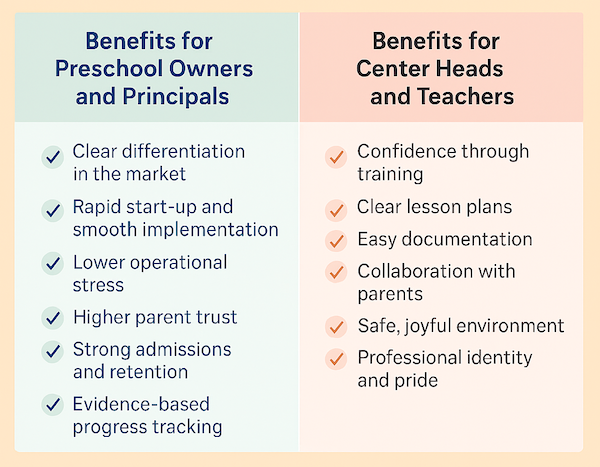
By choosing the right partners, building strong systems, and nurturing your teachers and parents, you can create a preschool that delivers world-class learning and emotional security for every child.
What next?
👉 Learn more about how Kindiedays can support your preschool with a complete Curriculum Partnership — combining Finnish early education principles, digital tools, lesson plans, and teacher workshops tailored for challenger preschools.

👉 Click here to schedule a consultative call on Zoom or contact me on WhatsApp!
I look forward to meeting you.
Milla van der Burgh