.png)
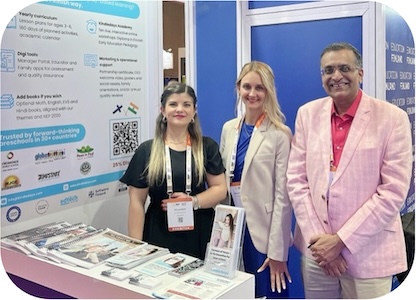
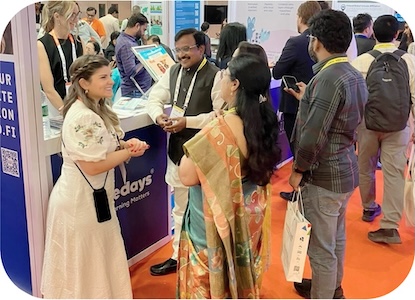
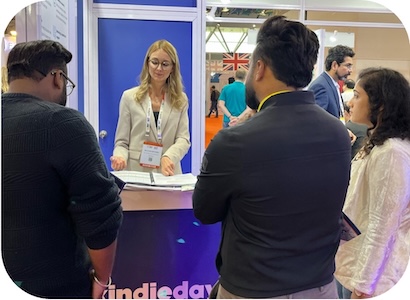
This year at DIDAC India, the Kindiedays team, with Milla, Stella, and Ranjan, had the opportunity to speak with hundreds of preschool owners, academic heads, coordinators, and teachers from all over the country. With the new NEP, it’s clear that preschools must rethink how learning happens. Owners and academic heads understand the direction, but they need support to turn the NEP’s ideas into practical changes in their classrooms. Across conversations, one theme repeatedly surfaced:
There is strong interest in playful learning—especially the way it is practiced in Finland—but many educators feel unsure about how to put it into action.
Below, we share the key insights from these conversations and how Kindiedays supports schools in navigating this exciting transition.
1. NEP has planted the seed, but practical guidance is still missing
Preschool owners told us they understand that NEP encourages more:
- playful learning
- experiential activities
- holistic development
- child-centered classrooms
- formative assessment
However, the gap lies in practical implementation.
Many said:
“We know what NEP wants, but we don’t know how to make it happen in the classroom.”
And this is where the challenge begins:
- Teachers have not been trained in playful, experiential methods.
- Lesson plans alone are not enough—teachers need practical, hands-on training.
- Changing teaching practices overnight is impossible without guidance, support, and time.
2. The Top-Down Structure in Indian Preschools Shapes Implementation
Teachers visiting our booth shared something sincere:
“We want to teach differently, but we don’t have the power to change things.”
In most Indian preschools:
- Owners and academic coordinators make decisions.
- Teachers follow the structure given to them.
This means real change must begin with leadership, not individual teachers.
The good news? Many owners who visited us want to make changes—they need a clear, achievable pathway.
3. The Reality: Parents expect books, and that shapes school decisions
A significant concern owners shared was: “Parents won’t register if we don’t show books.”
Books remain a cultural symbol of “real learning” in India. Even though Finland does not use textbooks in early childhood education, Indian preschools must consider parental expectations.
This is why a blended approach is not only practical—it is essential.
A balanced solution:
- Keep your books and academic structure.
- Add playful, experiential activities 1–2 times a week—or daily, depending on your comfort level.
- Slowly increase child-centered practices as teachers and parents become more confident.
You don’t need to choose between Finnish or Indian curriculum.
You can integrate the best of both.
Thanks to our collaboration with Saar Education, preschools can use high-quality books while still adopting Finnish-inspired methods.
4. Why Do Children in Finland Love Coming to School?
A powerful question we heard again and again:
“How is it possible that children in Finland love going to school?”
Here is the simple answer:
In Finland:
- Children start primary school at age 7, not earlier.
- They do not use textbooks in preschool.
- They do not follow strict subjects throughout the day.
- Learning is play-based, child-centered, and exploratory.
- Teachers act as facilitators, not lecturers.
- Classrooms are organised into learning corners, not “classroom vs. playroom”.
- Children work in small groups, receiving individual support.
When learning feels meaningful, joyful, and connected to a child’s interests, motivation naturally grows.
Indian preschools can apply these principles step by step in ways that fit local culture.
5. “Can We Become a Fully Finnish Preschool?” — The Most Popular Question at DIDAC
The answer is honest and straightforward:
No, because India is not Finland.
But you can adopt Finnish elements to transform learning in your preschool.
The level of change is entirely up to each owner:
Option A – Small Steps
- Add playful activities once or twice a week
- Introduce learning corners
- Add small-group learning
Option B – Medium Integration
- Daily playful, experiential activities
- Redesign classroom layout
- Increase child agency and choice
Option C – Deep Integration
- Major environment reorganisation
- Daily child-led projects
- Comprehensive shift toward Finnish-inspired curriculum
All approaches are valuable.
Change is not a race. What matters is taking stable, sustainable steps.
6. Where to Start: The Three-Step Kindiedays Pathway
From our conversations at DIDAC, one thing became clear. Schools want change—but need a roadmap.
Here is the pathway we recommend, and the one most preschools choose to follow:
⭐ STEP 1 — Kindiedays Academy (Teacher Training)
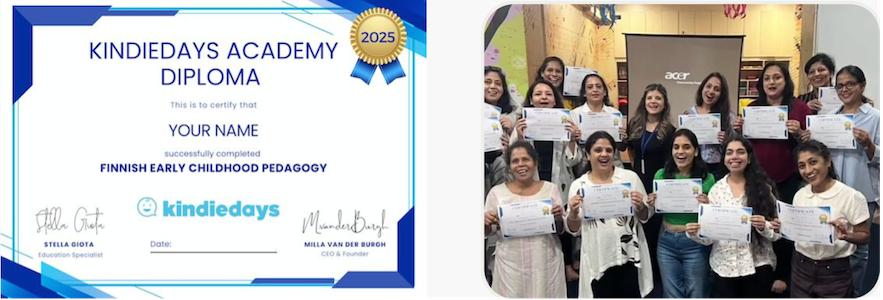
This is the foundation for every preschool, no matter how much Finnish pedagogy you plan to adopt.
- 10 interactive workshops
- Hands-on, experiential learning
- Practical implementation after each session
- Real-time discussions (not pre-recorded)
- Teachers can ask questions and receive feedback
- Builds confidence in playful, child-centered teaching
The demand was so high at DIDAC that we opened three new cohorts on the spot. The next one starts December 20th, and you can still sign up HERE.
⭐ STEP 2 — Playful Finnish-Inspired Lesson Plans + Digital Solution
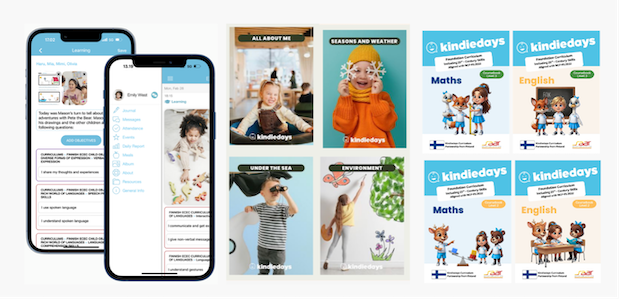
Lesson plans support teachers in bringing experiential learning into the classroom, even alongside traditional books.
The Kindiedays digital solution helps preschools:
- document learning
- assess progress
- track development
- involve parents
- monitor the quality of Finnish-inspired implementation
Leadership gains visibility into what is happening in classrooms.
⭐ STEP 3 — Partnership & Marketing Support
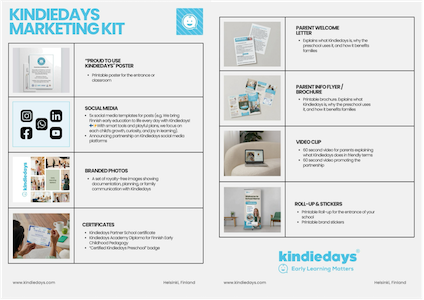
Indian preschools shared the intense competition they face. Many said:
“We need strong marketing support to stand out.”
With a partnership, preschools receive:
- joint branding
- marketing guidance
- Finnish pedagogy credibility
- long-term collaboration
Schools can choose:
- all three steps, or
- start with one step and grow gradually.
There is no pressure—only progress.
A New Chapter for Indian Early Childhood Education
DIDAC showed us that India is ready. Preschool owners are curious, motivated, and passionate about improving learning experiences. They don’t want to copy Finland. They want to take what works—and make it meaningful in the Indian context.
What next?
👉 Learn more about how Kindiedays can support your preschool with a complete Curriculum Partnership — combining Finnish early education principles, digital tools, lesson plans, and teacher workshops tailored for challenger preschools.

I look forward to meeting you.
Milla van der Burgh
👉 Click here to schedule a consultative call on Zoom or contact me on WhatsApp!
PS Join our official WhatsApp group 👉 click here to join the group!