.png)
But what does playful learning actually mean?
- Is it simply giving children more time to play?
- Does it mean abandoning academic learning?
- How can children develop literacy, numeracy, and other essential skills through play?
- And how do teachers ensure that every child is progressing?
Playful learning is much more than a trend or a marketing phrase. When implemented well, it is a carefully planned educational approach that combines children's natural curiosity with clear learning objectives, helping them develop the knowledge, skills, and attitudes they need for lifelong success.
Let's explore what playful learning really means—and why it is changing the future of preschool education.
What is playful learning?
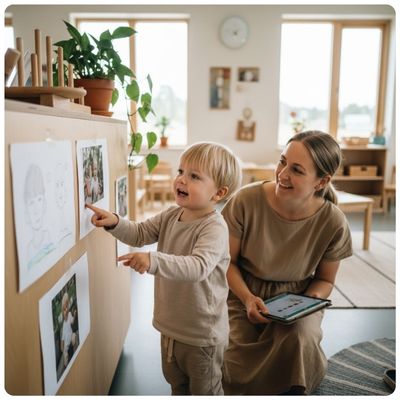
Playful learning is much more than simply allowing children to play.
It is an intentional educational approach where carefully planned activities use children's natural curiosity as the driving force for learning. Every activity has a clear pedagogical purpose, even if it feels like play to the child.
When children explore, experiment, build, imagine, discuss, create, and solve problems together, they develop much more than academic knowledge. They strengthen language, communication, creativity, social skills, emotional regulation, critical thinking, and confidence—all at the same time.
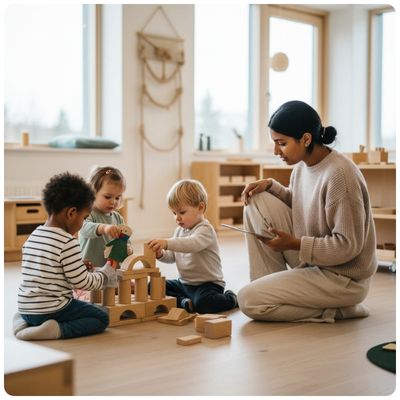
Instead of asking children to memorise information, playful learning encourages them to understand, experience, and apply new knowledge. Learning becomes something children want to do rather than something they have to do.
Why Finland chose play instead of pressure
Finland has spent decades developing one of the world's most respected early childhood education systems. Rather than introducing formal academics at increasingly younger ages, Finnish educators focus on creating strong foundations for lifelong learning.

Children are encouraged to:
- explore independently
- collaborate with others
- ask questions
- solve real-life problems
- learn responsibility
- express themselves creatively
- develop emotional wellbeing
The goal is not to produce children who can complete worksheets faster than everyone else. The goal is to help every child become a confident, capable learner who enjoys discovering new things. This philosophy has attracted worldwide attention because it develops both academic readiness and the social-emotional skills that children need throughout their lives.
Great activities begin with clear learning goals
One of the biggest misconceptions about playful learning is that teachers simply "play with children."
In reality, effective playful learning requires careful planning. Every activity should support specific learning objectives.
For example, a simple role-play activity in a pretend grocery store may simultaneously develop:
- language and communication
- early mathematics
- cooperation
- problem solving
- confidence
- social interaction
The activity looks like play - but the learning outcomes are carefully planned. This is why successful preschools align their lesson plans with curriculum objectives rather than selecting activities simply because they are fun.
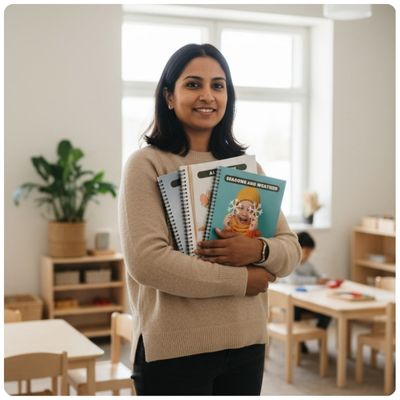
When teachers understand why an activity matters, they become more intentional educators.
Parents want to see learning—not just hear about it
Modern parents increasingly want evidence of their children's development.
A short conversation during pick-up time is valuable, but it rarely captures everything a child experiences throughout the day.
Parents appreciate seeing:
- photos of meaningful learning moments
- observations of new skills
- examples of creativity
- progress over time
- explanations of what children are learning
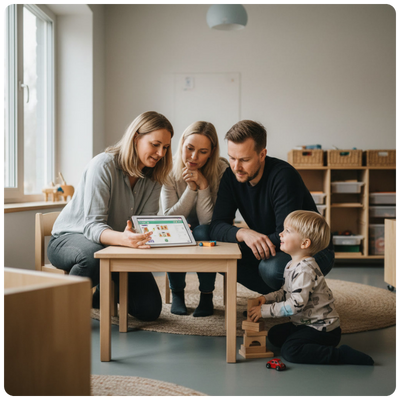
When families understand the educational purpose behind playful activities, they become much stronger partners in their children's learning journey. Trust grows because learning becomes visible.
Assessment looks different in a playful classroom
Traditional assessment often focuses on finished products such as worksheets or tests.
Playful learning requires a different approach. Children demonstrate learning continuously while they interact, create, communicate, solve problems, and collaborate.
Teachers therefore observe children during everyday learning experiences. These observations are documented over time, creating portfolios that show each child's unique learning journey.

Instead of asking: "What worksheet did the child complete?"
Teachers ask: "What did the child discover today?" "What strategies did the child use?" "How has the child's thinking developed?"
This approach provides a much richer understanding of learning.
Technology can strengthen—not replace—good teaching
Technology should never replace meaningful interactions between teachers and children. Instead, it should make high-quality teaching easier.
Digital tools can help educators:
- plan learning experiences
- document observations
- organise portfolios
- communicate with parents
- monitor children's progress
- reflect on teaching practices
When routine administrative work becomes simpler, teachers can spend more time doing what matters most—engaging with children.
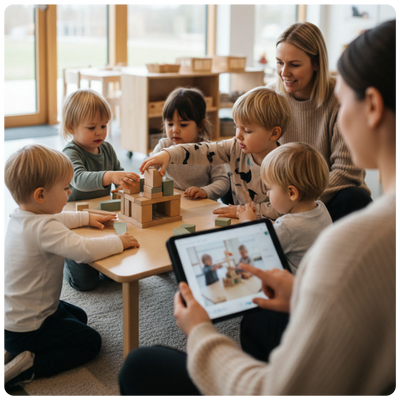
A complete learning environment
Successful playful learning is not built on one great activity.
It is created by combining several essential elements into one coherent learning environment:
- a child-centred educational philosophy
- curriculum-aligned lesson planning
- engaging learning experiences
- ongoing observation and documentation
- meaningful parent partnerships
- efficient systems that support educators
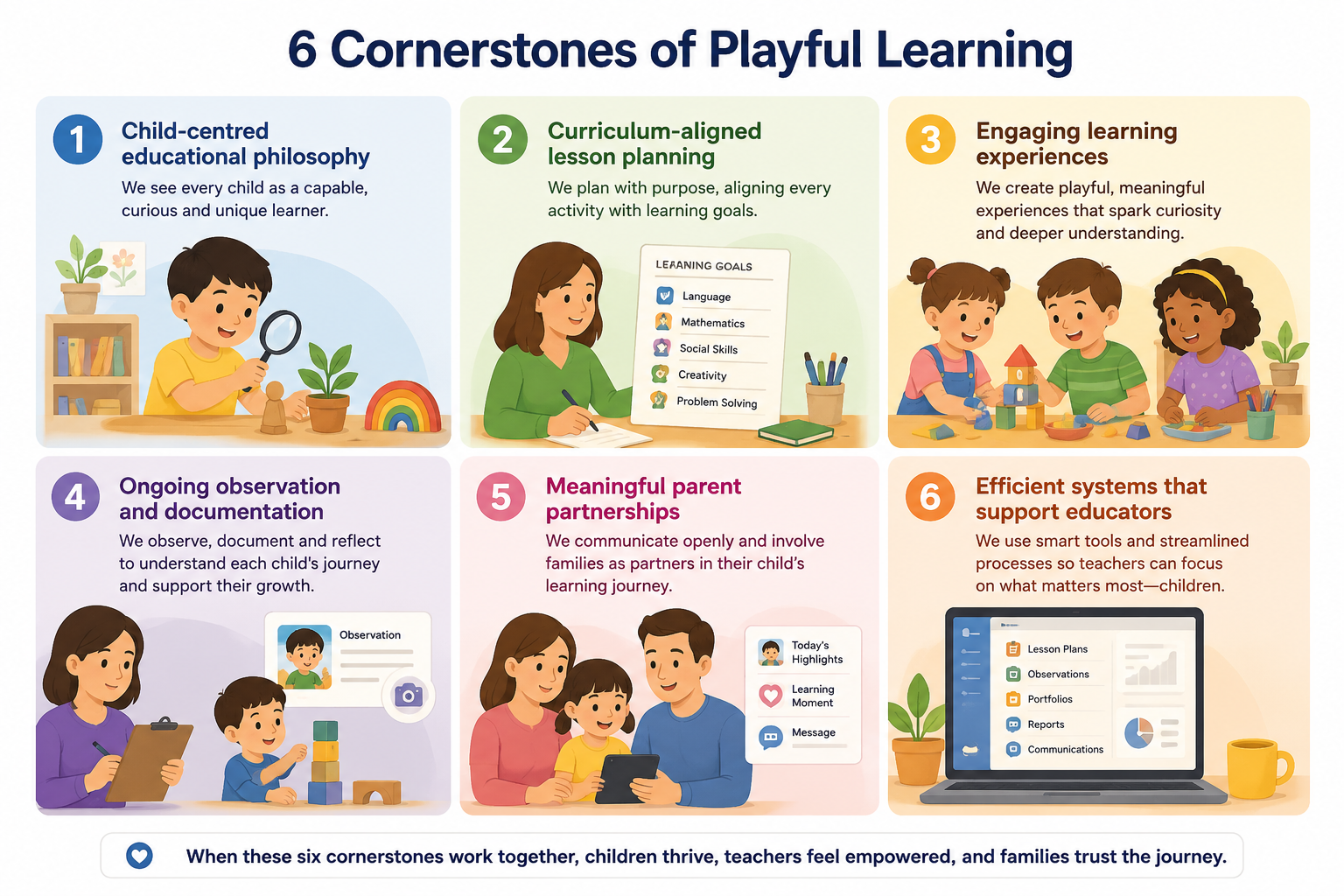 Image created by AI
When these pieces work together, the results are powerful.
- Teachers gain confidence.
- Parents gain trust.
- Children develop a genuine love of learning.
Bringing playful learning into your preschool
Transitioning to playful learning does not happen overnight. It requires a shared vision, teacher development, practical lesson planning, and systems that support consistent implementation.
The encouraging news is that thousands of preschools around the world have already begun this journey. Many are drawing inspiration from Finnish early childhood education while adapting the approach to their own curriculum, culture, and community.
The result is a learning environment where children are active participants, teachers become confident facilitators of learning, parents feel closely connected to their children's development, and preschool owners can clearly demonstrate the quality of the education they provide.
Playful learning is not simply another teaching method. It is a different way of thinking about childhood, education, and the incredible potential that exists in every young learner.
What next?
👉 Learn more about how Kindiedays can support your preschool, combining Finnish early education principles, digital tools, lesson plans, and teacher workshops tailored for challenger preschools. Explore our Preschool Growth Roadmap HERE!

👉 Click here to schedule a demo on Zoom or contact me on WhatsApp!
I look forward to meeting you.
Milla van der Burgh