.png)
In many early childhood settings, storybooks are read only once or twice a week. Often, once children begin learning letters or reading simple words, adults stop reading aloud to them.
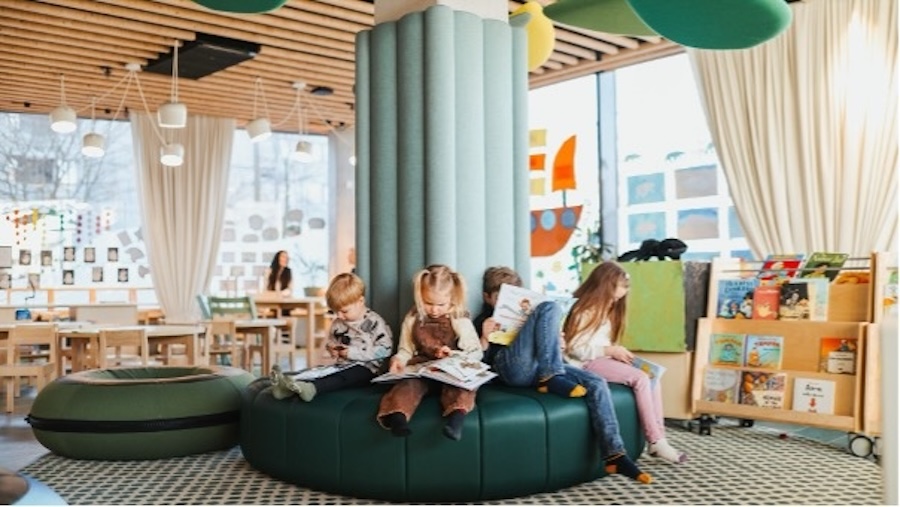
But in Finnish early childhood education, story reading remains an important daily part of learning — even when children start reading independently.
Why?
Because books are not only about teaching children to read. They help children learn to think, communicate, imagine, and understand emotions.
Reading With Children, Not To Children
There is a big difference between reading to children and reading with children.
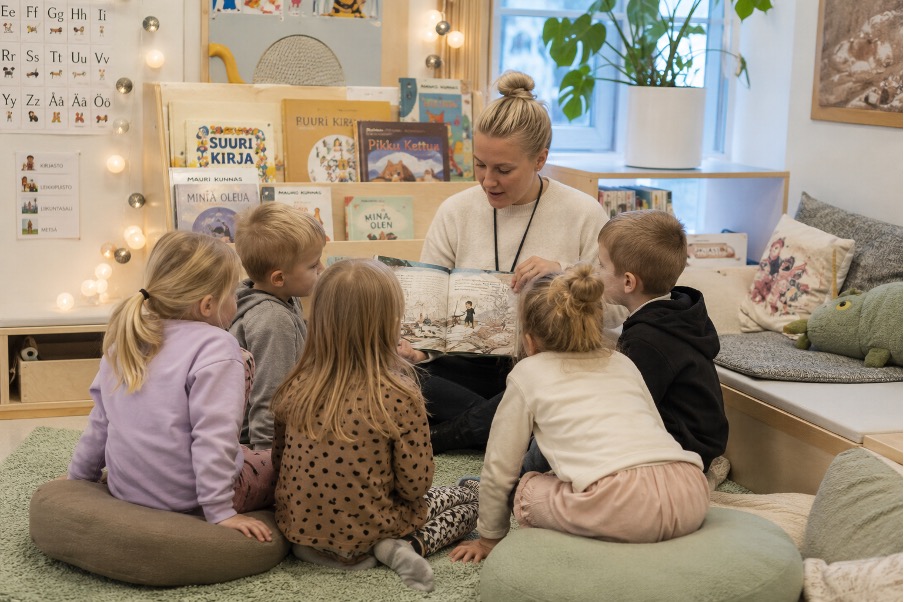
Reading with children means:
- asking questions,
- discussing pictures and characters,
- encouraging predictions,
- listening to children’s ideas,
- and making stories interactive.
In Finnish early childhood education, story time is often seen as a shared experience and conversation, not a quiet listening exercise.
How Do We Create a Love for Books?
Children develop a love for books when reading feels warm, meaningful, playful, and connected to their interests.
One important way to support this is by creating a cozy and inviting book corner.
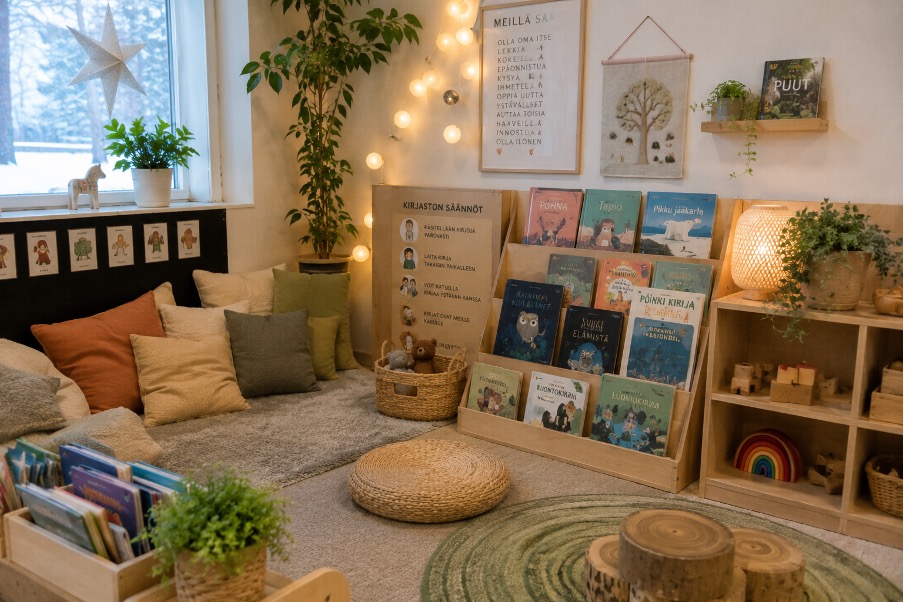
A good book corner does not need to be expensive. It can include:
- soft pillows or rugs,
- warm lighting,
- comfortable seating,
- baskets or low shelves where children can independently access books,
- puppets or storytelling props,
- and books displayed with covers visible instead of stacked away.
The environment itself should invite children to explore books freely throughout the day — not only during teacher-led activities.
What Kind of Books Should We Include?
In Finnish early childhood settings, the library area usually includes many different types of books, not only traditional storybooks.
For example:
- picture books,
- nonfiction books,
- books connected to the current topic of exploration,
- poetry books,
- books about emotions,
- nature and animal books,
- multicultural books,
- magazines such as children’s versions of National Geographic,
- and even wordless books.
Wordless books are especially powerful because children can create their own stories by interpreting the pictures. This strengthens imagination, storytelling skills, communication, creativity, and confidence.
If children are exploring space, insects, transportation, the oceans, or emotions, books on those topics can be added to the book corner. In this way, books become connected to children’s real investigations, play, and curiosity.
Why Daily Reading Matters
Reading stories every day supports:
- language development,
- vocabulary growth,
- imagination and creativity,
- emotional understanding,
- communication skills,
- concentration,
- and critical thinking.
Children hear richer language through books than in everyday conversation. Stories also help children understand emotions, relationships, and different perspectives.
Reading Should Continue Even After Children Start Reading
One common misunderstanding is that once children begin reading independently, adults no longer need to read aloud.
In reality, children can understand much more through listening than through their own early reading skills. When adults continue reading aloud, children are exposed to richer vocabulary, deeper ideas, and more complex stories.
In Finland, reading aloud often continues even in primary school because stories are viewed as opportunities for connection, thinking, and discussion — not only literacy practice.
Books as Part of Everyday Learning
In Finnish classrooms, books are often connected to play and exploration.
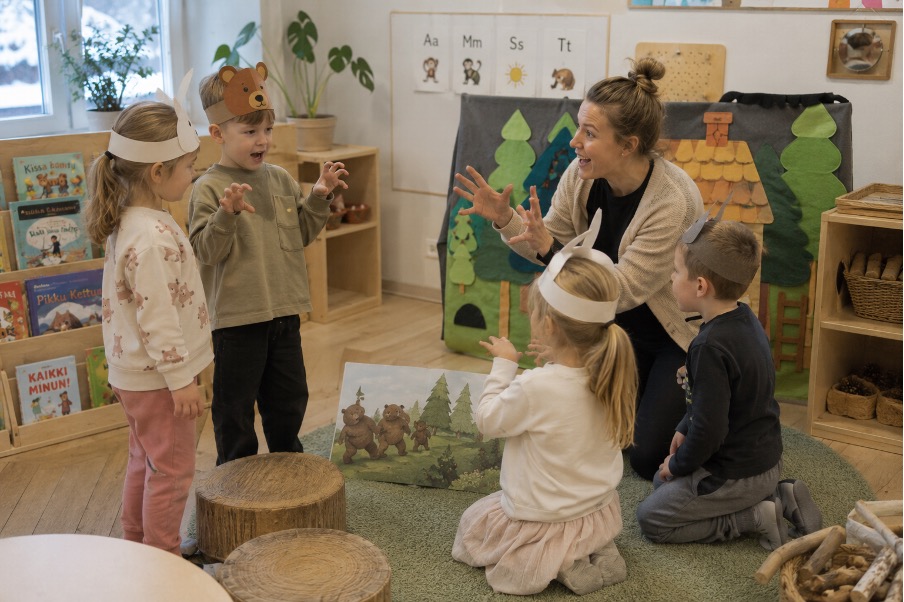
A story may inspire:
- dramatic play,
- art activities,
- outdoor exploration,
- storytelling,
- or group discussions.
Books become part of children’s daily experiences rather than isolated teaching moments.
Conclusions
Children do not develop a love for reading through pressure or worksheets alone. They develop it through meaningful experiences with stories and caring adults.
Sometimes, the most powerful learning moment in a classroom begins with a simple sentence:
“Once upon a time…”
At Kindiedays, we strongly believe that storybooks should be part of children’s everyday learning experiences — not only before children learn to read, but throughout the early years.
We have prepared a themed storybook list for different topics and learning experiences in early childhood education. Click here to download the book list.
If you would like to learn more about Finnish early childhood education practices and how they can be meaningfully implemented in international contexts, you can also join the upcoming Kindiedays Academy – Cohort 14, starting on Thursday, the 21st of May.
You can still join HERE!
Stella Giota

stella@kindiedays.com